


The Asian Scientist 100
Emi Ito

Institution
Osaka University
Country
Japan
Field
Life Sciences
Ito was awarded the 2023 JSPS Ikushi Prize by the Japan Society for the Promotion of Science for her research on unraveling the role of host-derived metabolites in the development of innate-type T cells.
(Photo: Osaka University)
AWARDS
- 2023 JSPS Ikushi Prize
Related articles

Saving Project NOAH
The Philippines recently witnessed the near-death and resurgence of its flagship disaster risk reduction and management program. Jo Brianne Briones shares an insider’s perspective.

Fat Distribution Predicts Breast Cancer Subtypes
By analyzing body mass index and waist-hip ratio, scientists in China have discovered that the location of body fat is linked to specific breast cancer subtypes.

The Dust That Discolors The Taj Mahal
Scientists have identified the particles responsible for discoloring the Taj Mahal, some of which are also harmful to human health.

How Blood Stem Cells Are Controlled By Epigenetics
Using RNA sequencing techniques, researchers in China have revealed how embryonic hematopoietic stem cell production is controlled by epigenetic regulation.

Nanocapsules Selectively Sequester Sucrose
Researchers in Japan have developed a nanocapsule that recognizes and encapsulates sucrose while excluding other natural sugars.

Finding Fossils With Forensic Science
Forensic science has helped researchers find evidence of ancient archaea in sedimentary rocks from the Permian and Lower Triassic periods.

Exposing A Silent Killer: Liver Disease
Non-alcoholic steatohepatitis (NASH) is set to become the number one cause of liver transplants, but innovative imaging modalities are paving the way for much needed new drugs.

Math In A Time Of Cholera
Using mathematical models to analyze data from the World Health Organization, scientists in Japan accurately forecasted the peak of the 2017 cholera outbreak in Yemen.
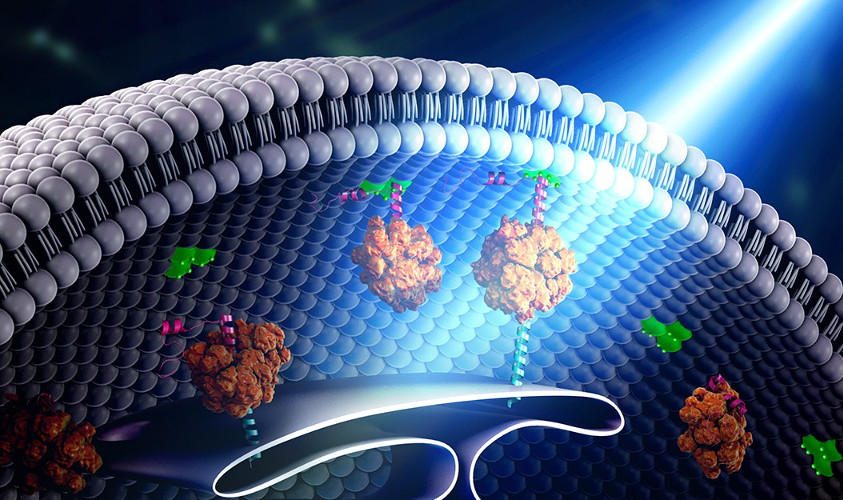
Using Light To Build Bridges In Cells
A genetically-engineered, light-sensitive protein has allowed scientists to measure and manipulate protein-membrane interactions in living cells.