


The Asian Scientist 100
Max Lu
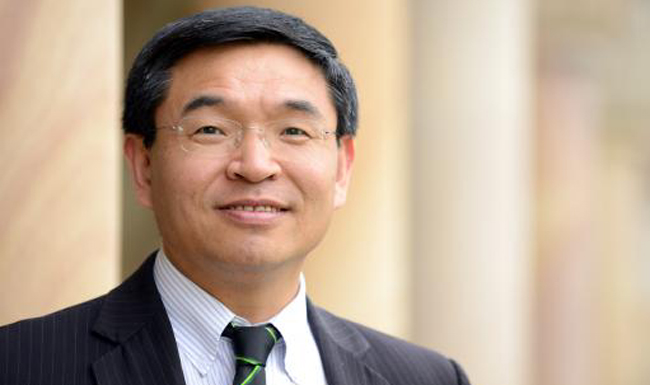
Provost and Senior Vice-President
Institution
University of Queensland, Australia
Country
China
Field
Chemistry
The Chemical Society of Japan gave Lu the Colloid and Surface Chemistry Lectureship Award 2015 for developing advanced materials in the areas of clean energy, the environment and healthcare.
(Photo: University of Surrey)
Related articles

Residual Crop Burning In India Poses Health Risks, Economic Losses
Researchers in India and the US have found that residual crop burning to clear farmland is linked to poor respiratory health and up to US$30 million in economic losses annually.

NTU And Volvo Unveil World’s First Full-Size Self-Driving Bus
The bus is equipped with a range of sensors for autonomous navigation and is managed by a secure artificial intelligence system.

ASLAN Partners BioGenetics To Commercialize Varlitinib
ASLAN Pharmaceuticals will focus on clinical development of varlitinib while BioGenetics will obtain the necessary regulatory approvals for the use of the drug in South Korea.

Building Better Inorganic Perovskite LEDs
By using cesium trifluoroacetate, scientists have created bright, all-inorganic perovskite LEDs with a half-lifetime of over 250 hours.

NVIDIA Bolsters Singapore’s AI Ambitions
Singapore gets an AI boost with the launch of the Future Talents Program and AI.Platform@NSCC.

Computing In The Cosmos
Supercomputing Asia talks to Hewlett Packard Enterprise’s Dr. Goh Eng Lim about the company’s supercomputer that is boldly going where no supercomputer has gone before.

Supporting Science At All Scales
Supercomputers are helping scientists investigate phenomena at all scales, from the cosmos to quantum mechanics.

Bioengineering Increases Rice Yield By 30 Percent
Scientists in China have developed a method called GOC bypass that can increase the yield of rice by almost 30 percent.

Asia’s Rising Scientists: Shoko Takahashi
Having founded Genequest when she was still a student, Dr. Shoko Takahashi is well on her way to creating a human genome database that could help advance clinical research in Asia.