


The Asian Scientist 100
Lim Wee Seng
Executive Director, Satellite Research Center
Institution
Nanyang Technological University
Country
Singapore
Field
Aerospace & Astronomy
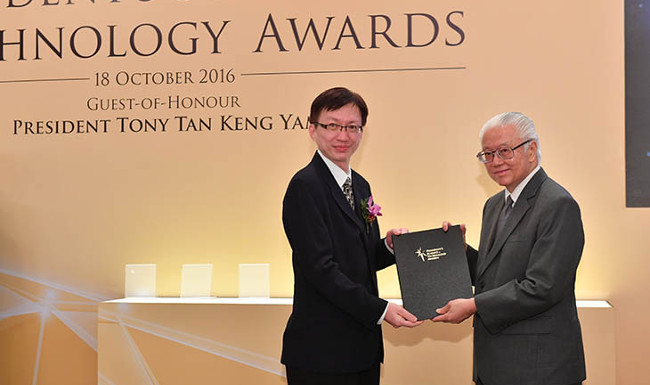
Lim, together with researchers and engineers from ST Electronics, the National University of Singapore, Nanyang Technological University and DSO National Laboratories were jointly recognized with a President’s Technology Award in 2016 for their contributions to the development of TeLEOS-1, a one-meter resolution satellite.
(Photo: Nanyang Technological University)
AWARDS
- President's Technology Award 2016
Related articles

First Map Of TB Bacteria Proteome
A map covering 95 percent of the Mycobacterium tuberculosis proteome could help researchers find new drugs and vaccines against tuberculosis.

Virtus Chipset Sends Data 1,000x Faster Than Bluetooth
Scientists in Singapore have invented a revolutionary microchip that can transfer a typical two-hour, eight-gigabyte DVD movie in just half a minute.

Passport Staff Miss One In Seven Fake IDs
A study showing that one out of every seven passport checks fails questions the use of photo IDs to secure borders.

Tackling The Urbanisation Crunch
Associate Professor Lau Hoong Chuin of SMU is tackling a key challenge of urbanisation: how to manage the increasing flow of people and physical goods into cities sustainably.

Chinese Herb May Help In Healing Spinal Cord Injuries
Researchers have found that a Chinese herb known as Ji-Sui-Kang (JSK) improved spinal cord injury outcomes in rats.

Student Researchers Build Compact Scooter Called VOI
Students at Technische Universität Muenchen and Nanyang Technological University have named their two-wheel concept vehicle after the Vietnamese word for elephant.

Polio Killings In Pakistan May Hurt Eradication Effort
The murder of health workers in Pakistan means the last leg of efforts to eradicate the disease can't be business as usual, says Heidi Larson.
Snakes & Folk Tales Meet Science In Disaster Warning
Indigenous knowledge and science often seem poles apart, but meshing them can curb disaster risk, reports Smriti Mallapaty.