


LATEST NEWS

Supercritical Fluids Help Stabilize Quantum Dot Formation
Supercritical CO2, which is also used to decaffeinate coffee, has been used to stabilize the formation of quantum dots.

NUS Launches US$18 Million Program In Synthetic Biology
The NUS Synthetic Biology for Clinical and Technological Innovation (SynCTI) hopes to position Singapore as one of the leading synthetic biology hubs of the world.

Crucial Hurdle In Quantum Computing Overcome
For the first time, researchers have built the basic building block of a quantum computer—a two-qubit logic gate—and have done so using existing silicon technology.
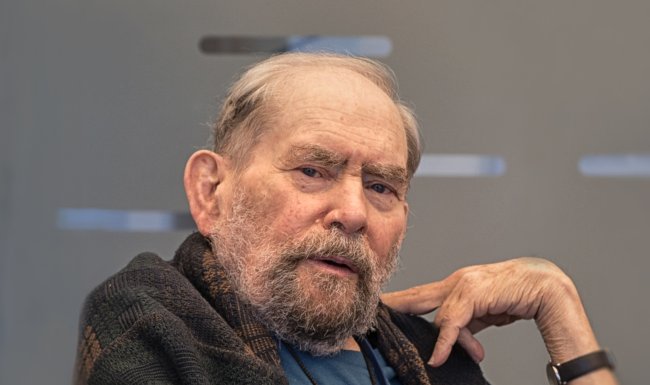
The Greatest Adventure In The World
Nobel Laureate Sydney Brenner, who is also Singapore's first honorary citizen, has been deeply involved in biomedical research in Singapore since the 1980s.

The Pragmatic University-Builder
Although he once wanted to be a musician, Professor Cham Tao Soon instead became one of Singapore's pioneering engineers, starting what is today the Nanyang Technological University.

Switching Off The Infanticide Instinct
Researchers have identified a region in the mouse brain involved in whether males decide to nurture mouse pups or attack them.

Could Candle Soot Power Electric Vehicles?
Just ten kilograms of fractal-like carbon nanoparticles from candle soot is sufficient for the battery of an electric vehicle, researchers say.

Estimating MERS Risks In Real-Time
The statistical method of estimating death risks in real-time developed by Japanese researchers is especially useful for novel outbreaks with few patients.

Exercise Triggers The Phosphorylation Of A Thousand Proteins
Over a thousand proteins are phosphorylated within ten minutes of exercise, suggesting that drugs to mimic exercise will have to target multiple pathways.


