


IN THE LAB

Samlonella Self-Acidifies To Survive Macrophages’ Acid Attack
The acidic environment of the macrophage vacuole not only fails to kill Salmonella but actually switches on bacterial survival genes.

Liquids Not As Uniform As Previously Thought
The identification of nanometer-sized structures formed during liquid-liquid transitions sheds new light on one of the fundamental states of matter.

Supernovae Ignitions Caused By Collisions, Not Internal Explosions
The complete lightcurves of three type 1a supernovae support the white dwarf merger theory of supernova formation.
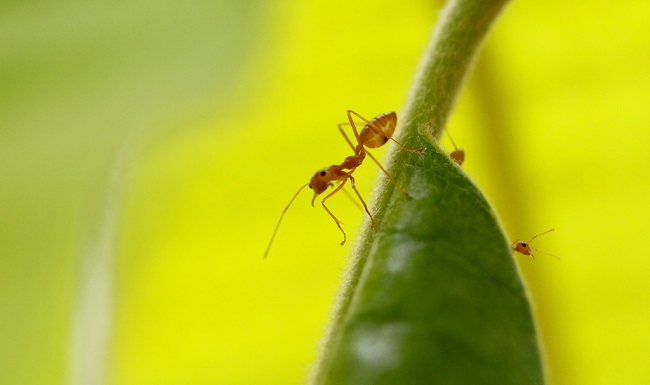
Do ‘Ant Repellents’ Protect Nectar Or Bees?
The amount of ant repelling compounds plants produce correlates to the size of the bee polinators they attract, study says.

Taiwanese MLD Patient Receives Genetically Modified Stem Cell Transplant
An 18 year old patient has seen an improvement in her condition following a stem cell transplant to treat metachromatic leukodystrophy.

Need A Nanostructure? Just Laser Print It!
Laser printed nanostructures that can selectively capture and release microparticles could find applications in chemistry and microfluidics.

Supercomputers Shed Light On Cellulose Synthesis
Aided by IMB supercomputers, researchers have performed quadrillions of calculations to model the synthesis of cellulose.

Why Embryos Die Without GPIs
A study in nematode worms shows that glycosylphosphatidylinositol lipid anchors are essential for membrane stability, particularly during embryogenesis.

MYC: The Link Between Cancer & mRNA Splicing
Although more commonly associated with cancer, the oncoprotein MYC also plays an essential role in alternative splicing.


