


IN THE LAB

Using Topological Defects To Engineer Self-Healing Materials
Nematic liquid crystals, commonly found in television displays, could find wider applications as a controllable scaffold for nano-sized colloids.

Self-Assembly Lowers PRAM Operating Currents
By harnessing self-assembling nanomaterials, scientists have made flexible phase-change random access memory devices more feasible.

Emotional Brains “Physically Different” From Rational Ones
Different types of empathy are reflected in differences in brain white matter distribution, scientists report.

A TOAD That Might Finally Find Magnetoreceptors
Using a technique known as transient optical absorption detection (TOAD), scientists now have a tool sensitive enough to locate the structures animals use to sense magnetic fields

Sound Can Enhance Sight, But Only If You Can Read Music
Listening to music enhances the ability to discriminate between conflicting information from the left and right eyes, but only if the person can read musical scores.

To Be A Sperm Or An Egg?
Female fish without the foxl3 gene produce fully functional sperm instead of eggs in their ovaries.

DNA-TLR9 Zipper Triggers Autoimmune Response
A zipper-like arrangement of DNA can bind strongly to the receptor TLR9 and trigger a strong immune response.
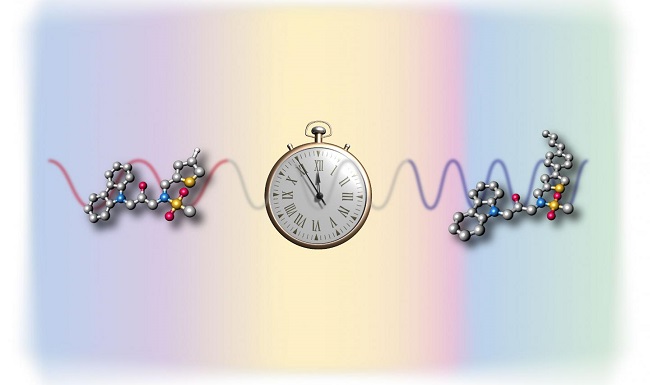
Tweaking Circadian Rhythms With Small Molecule Drugs
Synthetic chemistry has enabled researchers to develop small molecule drugs which target regulators of the circadian cycle.

Accurately Measuring Plasma With Interference
Researchers have developed a method to precisely measure the electron density of plasma even at atmospheric pressure.


