


Asian Scientist Newsroom

ABOUT
Asian Scientist Magazine is an award-winning science and technology magazine that highlights R&D news stories from Asia to a global audience. The magazine is published by Singapore-headquartered Wildtype Media Group.
Stories by Asian Scientist Newsroom

China’s Moon Rover Starts Exploring
China's Yutu moon rover has started exploring the surface of the moon, sending back the first photos it has taken on the moon.

Ginger-Shaped Asteroid Glides By China’s Lunar Probe Chang’e-2
A close flyby by Chang’e-2 of the near-Earth asteroid 4179 Toutatis reveals new insights into the geological features and formation of the ginger-root-shaped asteroid.

Silkworms That Spin Colorful Silk Fibers
Scientists have discovered a 'greener' dyeing method to producing colorful silk: by feeding dyed leaves to silkworms so they spin colored - rather than white - cocoons.

Strand Life Sciences Opens Genomics Center In San Francisco
Strand Life Sciences is collaborating with El Camino Hospital to open a Strand Center for Genomics and Personalized Medicine in San Francisco, US.

India’s Blood Pressure Skyrockets
Hypertension is skyrocketing in India, with rural-to-urban migrants at especially high risk.

A Simple Eye Test For Multiple Sclerosis
Researchers have developed a new instrument called the TrueField to accurately measure the pupil responses of patients with multiple sclerosis.
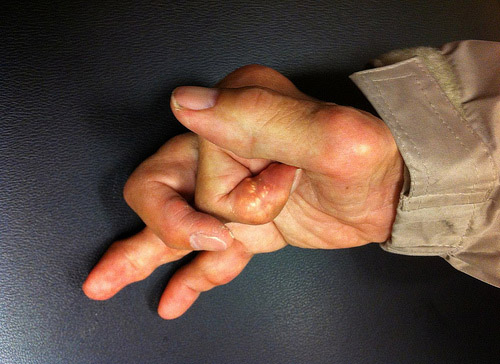
Taiwanese Study Shows Gout To Be Genetic
A study on the entire Taiwanese population of 23 million has confirmed that gout strongly runs in families.

IXICO, UMP To Improve Dementia Diagnostics In China
IXICO plc and Beijing Union Medical have signed an MoU to jointly work on improving the diagnosis and treatment of dementia in China.

Recycled Plastic Finds New Role In Killing Drug-Resistant Fungi
Researchers have discovered a new, potentially life-saving application for polyethylene terephthalate, which is widely used to make plastic bottles.