AsianScientist (Jan. 8, 2018) – In a study published in the journal Nature Communications, a team of researchers at the Daegu Gyeongbuk Institute of Science and Technology (DGIST) have developed a method to acquire high resolution mass spectrometry images in live biological samples.
Mass spectrometry imaging is a technique that allows researchers to obtain information about the spatial distribution of biomolecules in biological material. Typically, an ion beam desorption system or a laser desorption method is used, in which biomolecule samples are separated in a vacuum state, which allows the acquisition of a high-resolution mass spectrometric image.
However, for an accurate analysis of samples to be performed in a vacuum chamber, pretreatment processes such as the cutting of frozen samples or their chemical treatment is required. During the sample preparation process, side effects such as damage to the samples or loss of molecular information can occur.
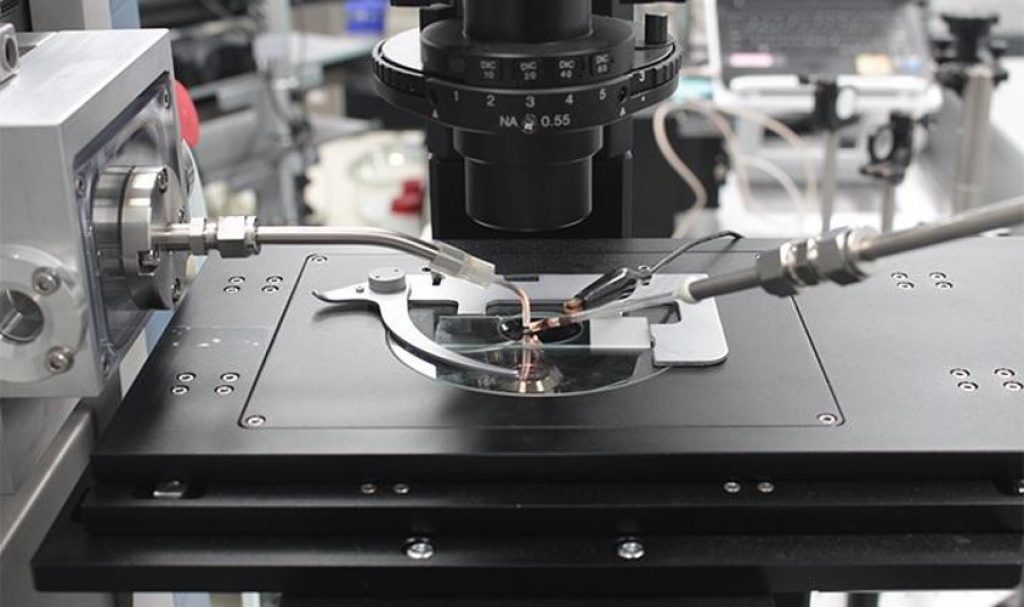
In the present study, the team of scientists led by Professor Moon Dae Won of DGIST leveraged the natural process by which cells take up molecules from the external environment to evenly distribute gold nanoparticles on biological samples. The gold nanoparticles changed the light absorption properties of the biological samples so that biomolecule desorption could easily occur at low laser power. The team used a laser to desorb biomolecules from biological samples and ionized these biomolecules using a plasma jet for mass spectrometry analysis.
Using this system, about 250 biomolecule substances were extracted from hippocampal tissue sections of a mouse brain, and mass spectrometry imaging with a resolution of 3 μm or less was obtained.
”With this method, a large amount of undamaged biomolecule information can be acquired from biological samples that have metabolic activity. At the same time, the spatial distribution of the biomolecules can be visualized at high-resolution. Therefore, this technology will significantly contribute to molecular biology research,” said Moon.
“We will carry out further studies to widen the molecular weight range that is detectable in the sample. We hope to use our technology in the field of medical diagnosis, such as in the development of new drug screening methods and mass spectrometric endoscopy,” he added.
The article can be found at: Kim et al. (2017) Atmospheric Pressure Mass Spectrometric Imaging of Live Hippocampal Tissue Slices with Subcellular Spatial Resolution.
———
Source: Daegu Gyeongbuk Institute of Science and Technology.
Disclaimer: This article does not necessarily reflect the views of AsianScientist or its staff.