AsianScientist (Aug. 11, 2016) – What causes a decline in immunity in old individuals? Researchers from the Institute for Basic Science (IBS) in Korea may have solved a piece of the puzzle. Their findings were published in Scientific Reports.
As soon as we are born we are destined to age. It’s a natural law which everyone adheres to. As we grow older, our immunity gradually declines to a point where it is no longer able to effectively orchestrate an immune response to fight and extinguish pathogens. The flu vaccine, for example, is only 17-53 percent effective in people aged 60 and over.
Two broad types of immune cells exist to protect us: naïve T-cells and memory T-cells. Naïve T-cells have neither fought nor been exposed to pathogens but are extremely diversified, and able to protect against new infectious agents. Conversely, memory T-cells are less diverse but are veterans, scarred and hardened from fighting malicious invaders.
As soon as puberty begins naïve T-cells start to gradually disappear, eventually rendering aged individuals more susceptible to infections.
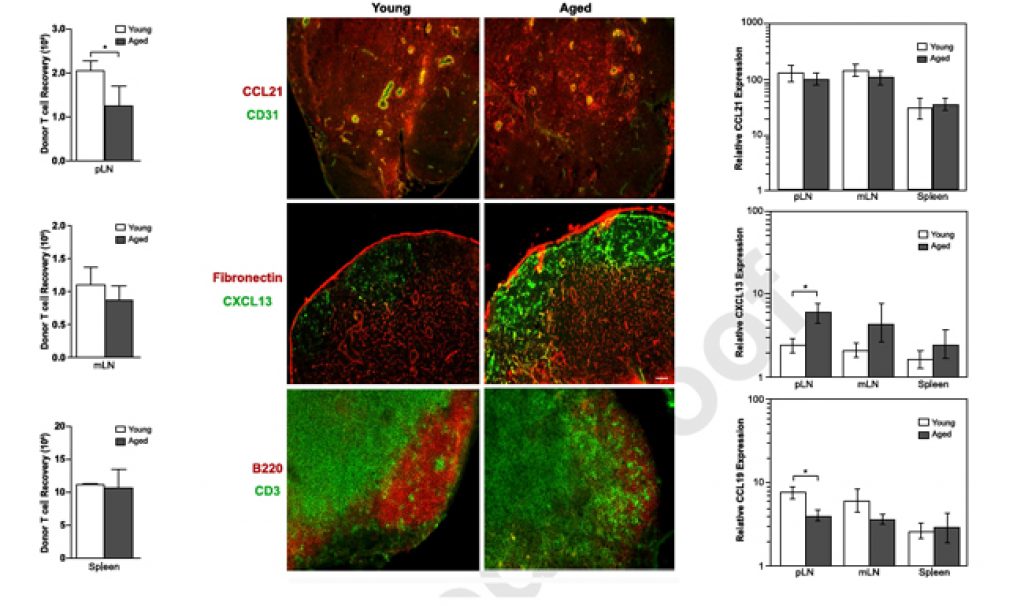
Led by Dr. Charles Surh, director of the Academy of Immunology & Microbiology at IBS, a team of researchers looked at the lymph nodes in mice and found deterioration in the population of stromal cells, which are essential in supporting the survival of naïve T-cells while maintaining the structure of the lymph node.
Their experiments in mouse models strongly supported their theory that a defect in the stromal cell population within the lymph node was contributing to naïve T-cell loss. They also showed that this defect must be rectified first before T-cells can be replenished.
“Our work is the first to demonstrate that the decrease in naïve T-cell numbers in old age is only not due to a decline in T-cell production in the thymus but also from deterioration in the environment that supports the survival of these cells,” said Surh.
The article can be found at: Becklund et al. (2016) The Aged Lymphoid Tissue Environment Fails To Support Naïve T-Cell Homeostasis.
———
Source: Institute for Basic Science.
Disclaimer: This article does not necessarily reflect the views of AsianScientist or its staff.