AsianScientist (Sep. 24, 2015) – Fish reared on the International Space Station for 56 days showed increased activity in cells involved in bone re-absorption, a telltale sigh of reduced bone density. This finding has been published in Scientific Reports.
Time spent in so-called ‘microgravity’ environments–where the force of gravity is considerably less than on Earth–can cause significant problems for the human body. Astronauts who spend a number of weeks in space have been shown to suffer from reduced bone mineral density, leading to skeletal problems. Other issues include problems with skin structure and a reduced ability to heal when wounded.
“During a long stay in the international space station, astronauts have severe bone loss due to microgravity,” explained corresponding author of the study Professor Akira Kudo from the Tokyo Institute of Technology.
Gravity is known to play a key role in the correct formation and maintenance of bone structure. Studies have shown that astronauts experience a significant drop in bone mineral density when they have been on space missions, but the exact molecular mechanisms responsible for this are unclear.
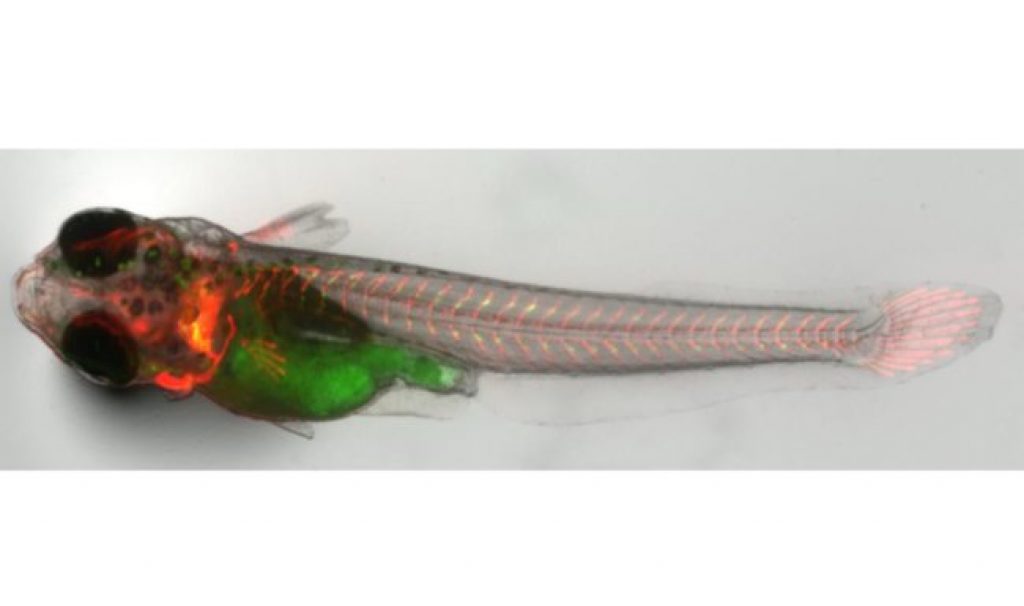
To address the problem, the team generated fish with bone cells known as osteoclasts that emit a fluorescent signal. They sent 24 fishes into space as juveniles, and monitored their development for 56 days under microgravity. The results were compared with a fish control group kept on Earth.
“Fishes like zebrafish and medaka are used as a animals model for organogenesis. Especially, medaka fish is a good model for bone development because the bone development of medaka is quicker and the medaka body is more transparent, which is beneficial for in vivo imaging,” Kudo told Asian Scientist Magazine.
Kudo and his team found that bone mineral density in the pharyngeal bone (the jaw bone at the back of the throat) and the teeth of the fish reduced significantly, with decreased calcification by day 56 compared with the control group. This thinning of bone was accompanied by an increase in the volume and activity of osteoclasts.
Osteoclasts are responsible for the re-absorption of bone tissue, resulting in demineralization and decalcification of the skeleton.
The team conducted whole transcriptome analysis of the fish jaws, and uncovered two strongly upregulated genes (fkbp5 and ddit4), together with 15 other mitochondria-related genes whose expression was also enhanced.
Reduced movement under microgravity also has an influence. The fish began to exhibit unusual motor behavior towards the latter stages of their stay in space, showing motionless at day 47.
The findings provide valuable details of bone structure physiology and the abnormalities caused by the stress to the body at reduced gravity.
“When we define the novel mechanism of osteoclast activation is related to mitochondria, we have a good tool to block the bone loss in space,” Kudo said.
The article can be found at: Chatani et al. (2015) Microgravity Promotes Osteoclast Activity in Medaka Fish Reared at the International Space Station.
———
Source: Tokyo Institute of Technology; Photo: Akira Kudo.
Disclaimer: This article does not necessarily reflect the views of AsianScientist or its staff.