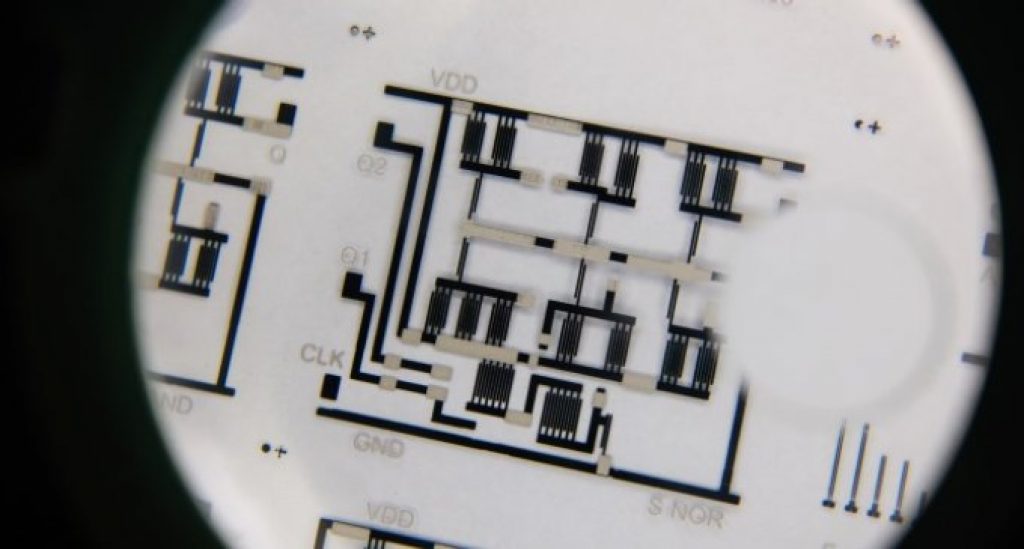
AsianScientist (Dec. 1, 2014) – Scientists from Nanyang Technological University (NTU) have successfully printed complex electronic circuits using a common t-shirt printer. This research has been published in the journal Organic Electronics.
The electronic circuits were printed using unique materials in layers on top of everyday flexible materials such as plastic, aluminium foil and even paper. Using non-toxic organic materials, the research team was able to print objects such as resistors, transistors and capacitors, the key components of a complex electronic circuit.
Associate Professor Joseph Chang, leader of the NTU research group said their unique printing technique has made mass production of disposable electronic circuits possible.
“This means we can have smarter products, such as a carton that tells you exactly when the milk expires, a bandage that prompts you when it is time for a redressing and smart patches that can monitor life signals like your heart rate,” he said.
“We are not competing with high-end processors like those found in smartphones and electronic devices. Instead, we complement them with cheaply printed circuits that cost mere cents instead of a few dollars, making disposable electronics a reality.”
The types of complex circuits the team has successfully printed include a 4-bit digital-to-analog converter—a component commonly used in turning digital signals into sound for speakers and headphones; and radio-frequency identification (RFID) tags, commonly used for tracking of goods.
The key difference between Prof. Chang’s method and the other types of printed electronics is that it is fully additive, which makes it eco-friendly. Furthermore, the circuits are printed without the use of any toxic chemicals or oxidizing agents.
“Our innovative process is green, using non-corrosive chemicals. It can be printed on demand when needed within minutes. It is also scalable, as you can print large circuits on many types of materials and most importantly, it is low cost, as print technology has been available for decades,” Prof. Chang added.
The technology has been awarded two provisional patents, including one on a cheap disposable Internet-of-Things for drug medication adherence. A new start-up company is being established and a venture capitalist has expressed interest to fund the commercialization of the invention. A multinational biomedical company has also expressed interest to adopt the application of printed electronics for biomedical devices.
Moving forward, a four-person multi-disciplinary team—two engineers, a material scientist and a chemist—will be looking to develop both digital and analog printable circuits for other biomedical applications in sensing and processing, where low-cost smart circuits are required and for smart lighting systems.
The article can be found at: Chang et al. (2014) Fully Printed Electronics on Flexible Substrates: High Gain Amplifiers and DAC.
——
Source: Nanyang Technological University.
Disclaimer: This article does not necessarily reflect the views of AsianScientist or its staff.