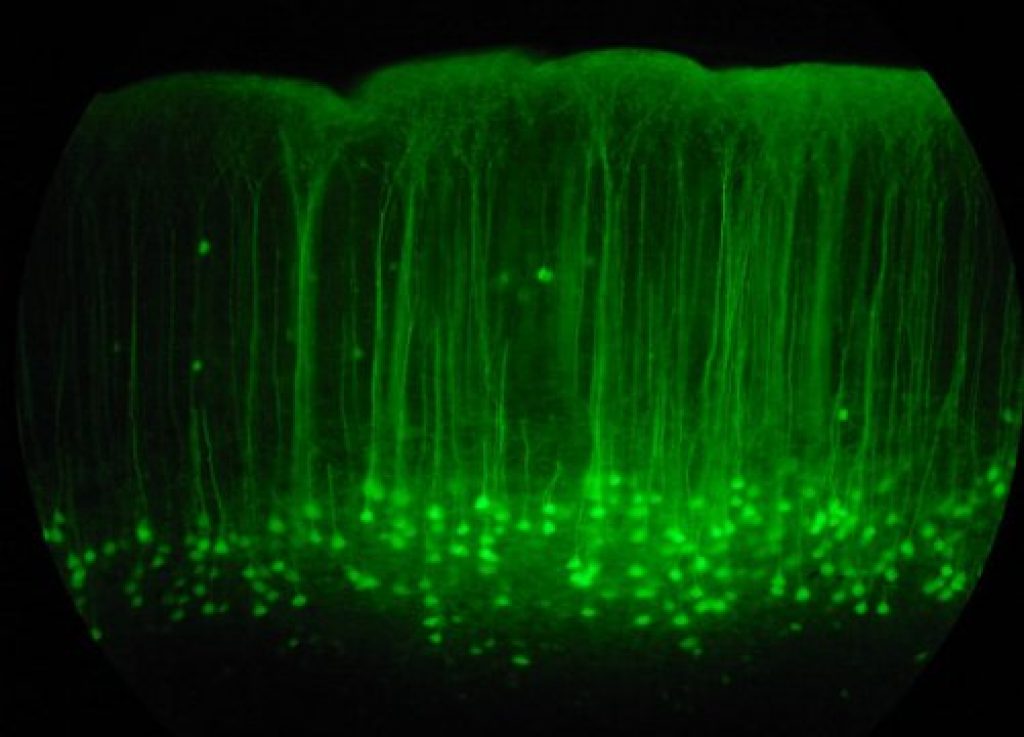
AsianScientist (Aug. 25, 2014) – Researchers have succeeded in revealing a principle mechanism of neural networks in the human brain, providing an important clue to potential treatments for absence seizures.
Absence seizures—brief, sudden losses of consciousness—are believed to be elicited by T-type calcium channels in the thalamic reticular nucleus of the brain that regulate influxes of calcium. These channels enable thalamic reticular nucleus neurons to generate burst firing, leading them to enter a hyper-excited state.
In order to identify the relationship between burst firing and absence seizures, the researchers conducted an experiment to induce absence seizures in mice using gene targeting techniques to delete the T-type calcium channel CaV3.3. The results, published in the Proceedings of the National Academy of Sciences of the United States of America, showed that mice which received a complete genetic deletion of the T-type calcium channel exhibited an increased frequency of absence seizures.
Moreover, the researchers observed for the first time that tonic firing also increased in such mice. The study was the first to discover that tonic firing plays a key role in the induction of absence seizure, which contradicts the existing hypothesis and carries significant implications for absence seizure treatment research.
The study calls into question the role of the T-type calcium channel in the reticular thalamus, and is expected to provide an important theoretical foundation for understanding its role in the mechanism of absence seizures, as well as developing effective treatment methods for absence epilepsy.
The article can be found at: Lee et al. (2014) Rebound Burst Firing in the Reticular Thalamus is Not Essential for Pharmacological Absence Seizures in Mice.
——–
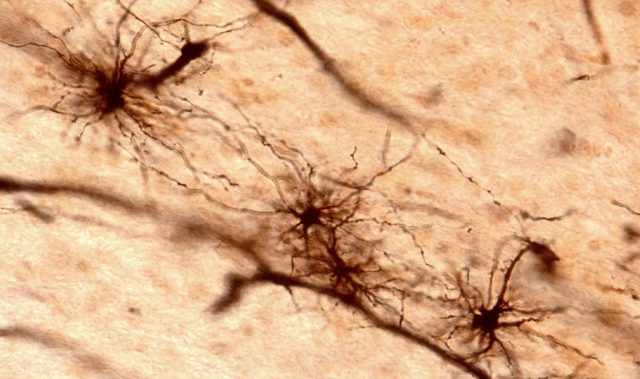
Source: Institute for Basic Science; Photo: Robert Cudmore/Flickr/CC.
Disclaimer: This article does not necessarily reflect the views of AsianScientist or its staff.