AsianScientist (Mar. 26, 2014) – All complex systems, whether they are found in the body, in international finance, or in social situations, fall into just three basic categories in terms of how they can be controlled, according to an article published in Science.
We don’t often think of them in these terms, but our brains, global financial markets and groups of friends are all examples of different kinds of complex networks or systems. Unlike the kind of system that exists in your car that has been intentionally engineered for humans to use, these systems are convoluted and how to control them is not obvious.
Economic collapse, disease and miserable dinner parties may result from a breakdown in such systems, which is why researchers have recently being putting so much energy into trying to discover how best to control these large and important systems.
Two brothers, Profs. Justin and Derek Ruths, from Singapore University of Technology and Design and McGill University respectively, have found that diverse complex systems can be classified into just three groups, based on how they can be controlled.
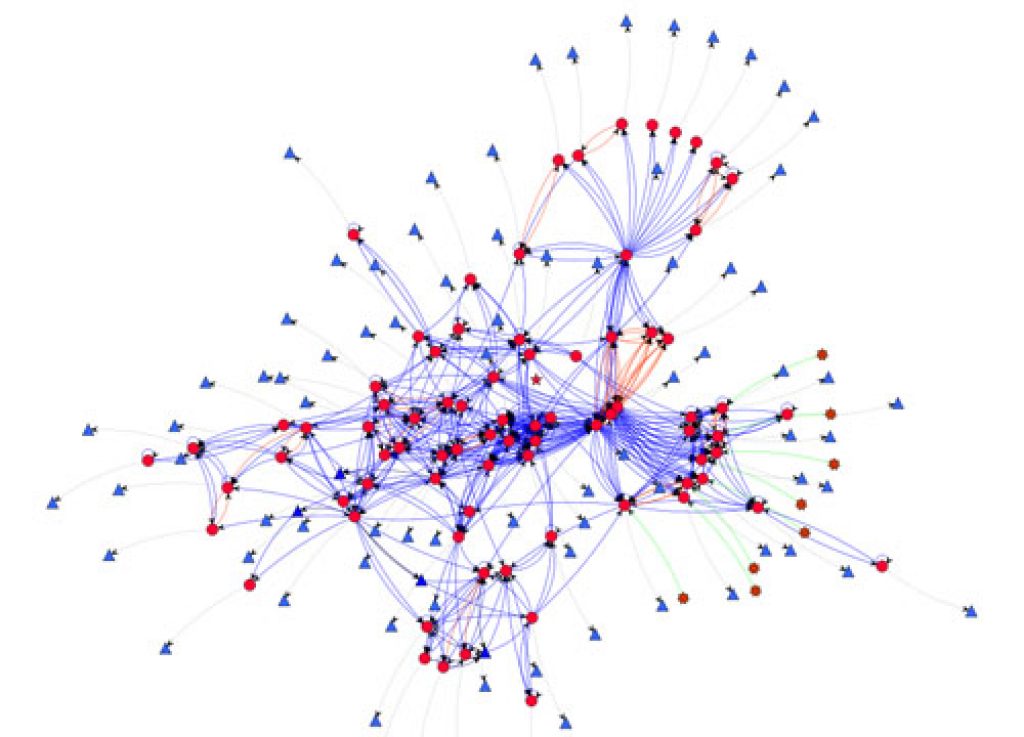
They reached this conclusion by surveying the inputs and outputs and the critical control points in a wide range of systems that appear to function in completely different ways.
“When controlling a cell in the body, for example, these control points might correspond to proteins that we can regulate using specific drugs,” said Justin Ruths. “But in the case of a national or international economic system, the critical control points could be certain companies whose financial activity needs to be directly regulated.”
One grouping, for example, put organizational hierarchies, gene regulation and human purchasing behavior together, in part because in each, it is hard to control individual parts of the system in isolation. Another grouping includes social networks such as groups of friends (whether virtual or real) and neural networks (in the brain), where the systems allow for relatively independent behavior. The final group includes things like food systems, electrical circuits and the internet, all of which function basically as closed systems where resources circulate internally.
Referring to these groupings, Derek Ruths commented, “While our framework does provide insights into the nature of control in these systems, we’re also intrigued by what these groupings tell us about how very different parts of the world share deep and fundamental attributes in common – which may help unify our understanding of complexity and of control.”
The article can be found at: Ruths and Ruths. (2014) Control Profiles of Complex Networks.
———
Source: McGill; Photo: sjcockell/Flickr/CC.
Disclaimer: This article does not necessarily reflect the views of AsianScientist or its staff.