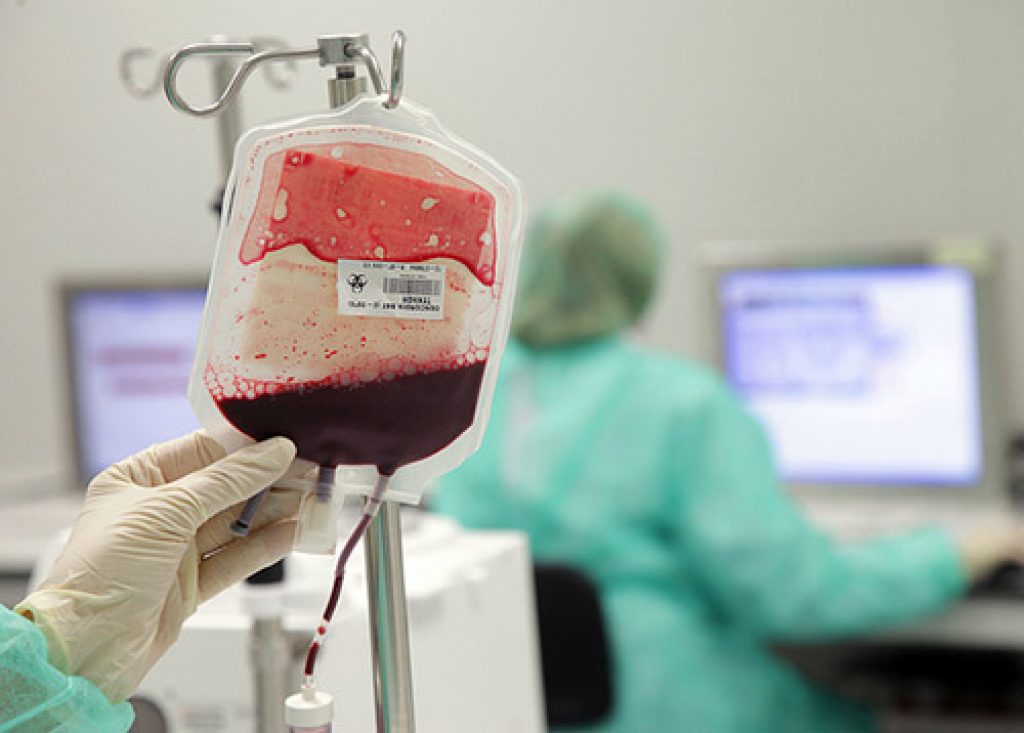
AsianScientist (Nov. 25, 2013) – Imagine this scenario. Your heart is failing and you are desperately looking for a replacement but no suitable donor can be found. Just as you are about to resign yourself to fate, your doctor suggests that they grow a new heart using the umbilical cord blood your mother saved during delivery. Far-fetched perhaps, but not impossible 30-50 years from now.
Expecting parents around the world commonly imagine such scenarios as the benefits of private cord blood banking. Furthermore, with slogans such as “Hope For The Future” and “With You For Life,” these companies seem to be doing little to dispel any misunderstandings.
But how true are these promises, and are they really worth the financial costs involved to maintain the cord blood? Aside from an enrollment fee of US$1,600, parents can expect to make annual payments averaging US$200 to store their child’s cord blood. A recent study in the journal Obstetrics & Gynecology estimated an average cost of US$1.3 million to save one year of life.
The potential of using cord blood for treatment was first established in Paris in 1988 when a child with Fanconi’s anemia, a blood disorder, was cured using stem cells extracted from his sibling’s cord blood. Since then, more than 30,000 cord blood transplants have been performed worldwide.
But unlike what many parents understand, cord blood is typically only useful for blood-related disorders, while its suitability for other purported uses, such as the regeneration of organs and tissues, is currently not possible.
For example, scientists have not been as successful in using cord blood to form cardiac, nerve and hepatic cells as they had initially expected to be. Associate Professor Mary Rauff of the Department of Obstetrics and Gynecology at the Yong Loo Lin School of Medicine, Singapore explained that it was due to the lineage of stem cells in the blood.
“In reality, stem cells in cord blood are mainly hematopoietic and there are very little mesenchymal stem cells present. Thus, the main use of cord blood has been in the field of transplantation involving blood elements as an alternative to bone marrow transplants,” said Prof. Rauff.
Even its use in blood-related disorders is limited. Treating diseases such as leukemia requires that healthy cells be transplanted. A patient’s own cord blood will not work as the blood cells contain genetic deficiencies that contributed to the disease in the first place. A donor’s cord blood is necessary to reverse the disease.
Hence, choosing to bank a child’s cord blood is an investment against two highly improbable scenarios: The first is the probability that another family member will need the cord blood, but even then the likelihood of a successful transplant will be marred if the blood is not a good match. The second is the probability that there will be new uses for cord blood in regenerative medicine or cell therapy. Unfortunately, such studies are still preliminary and may take years before any new developments occur.
Considering these two scenarios, what should we do with cord blood? The answer: donate it to a public cord blood bank! The American Academy of Pediatrics strongly supports public over private cord blood banking because there is “no data to support [the benefits of private cord blood banking] at the current time.”
Unfortunately, most public cord blood registries around the world do not contain many units from Asian populations. 40-60 percent of patients in Singapore are unable to find a stem cell match because of their ethnicity. By donating to a public cord blood registry such as the Singapore Cord Blood Bank (SCBB), you can play a part in increasing the number of cord blood units available to potential hematopoietic stem cell transplant (HSCT) patients. While public cord blood registries typically do not charge for storage, all rights to the donated cord blood will be relinquished by the donor to the bank. Subsequently, the donated cord blood will be made available to anyone who requires a transplant.
Only in special cases is the cord blood reserved specifically for the donor’s family. Under the Sibling Donor Program, expectant mothers who have been referred to the registry by a transplant physician, hematologist or oncologist may bank their baby’s cord blood for an identified elder biological sibling. There is a fee for collection, processing, testing and storage.
“In Singapore, the public bank acts like a blood bank. In the presence of a child, who has, say, leukemia, the sibling’s cord blood can be stored by SCBB,” said Prof. Rauff.
Furthermore, public cord blood registries also impose stringent criteria such as taking blood volume and cell count into account before storage, and only donated cord blood that meets international public cord blood banking guidelines for unrelated HSCT can be stored.
“Transplants having less than optimal cell count and volume have been found to have a less optimal outcome. The cord bloods that have not been up to mark are used for research or discarded depending on parents’ wishes,” said Prof. Rauff.
Although all parents want the best for their children, the next time someone offers you the opportunity to bank your child’s cord blood, consider carefully. Between saving someone else’s life and hoarding the blood for an improbable scenario, which one would you choose?
——
Copyright: Asian Scientist Magazine; Photo: Banc de Sang i Teixits/Flickr/CC.
Disclaimer: This article does not necessarily reflect the views of AsianScientist or its staff.