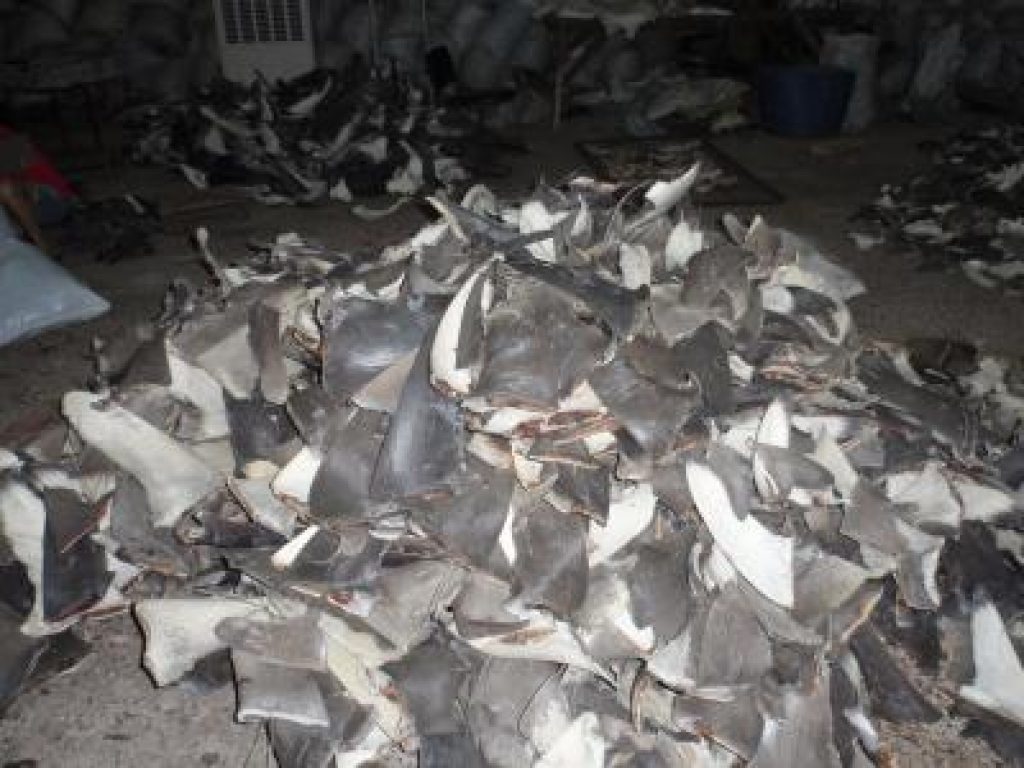
AsianScientist (Apr. 27, 2011) – An international team of scientists from the United States, Australia, South America, Asia, New Zealand and southern Africa has used mitochondrial DNA in nearly 400 sharks to differentiate dusky sharks (Carcharhinus obscurus) from copper sharks (Carcharhinus brachyurus).
Both are large apex predators that are heavily exploited for the shark fin trade, which claims tens of millions of animals every year to produce the Asian delicacy, shark fin soup.
In research published in the journal Marine and Freshwater Research, the team led by Dr. Demian Chapman was able to detect differences between sharks living along different continents – in effect, their DNA zip codes. These genetic differences are large enough for scientists to track the actual origin of the fins on sale in Asian markets, enabling better regional monitoring and management of these threatened predators.
As a result of this fishing pressure for their fins, the dusky shark is now classified as “Endangered” in the Western Atlantic by the International Union for Conservation of Nature as its population is just 20 percent of what it was two decades ago.
Adult females faithfully give birth along the continental region where they were born. If fished too much, the population will collapse, and it is extremely unlikely that it will be replenished from immigration of sharks from another region.
The recovery of the species is extremely slow because the average age of maturity is 20 years, its reproductive cycle only occurs every three years – including a two-year pregnancy, and its litter size is relatively small (three to 14 offspring).
“We, therefore, really need to establish sampling programs of fins on their way to Asia or in the markets to regulate the global trade before many more populations suffer the fate of the dusky shark in the United States,” said Dr. Chapman.
A previous study by Dr. Chapman published in 2009 used DNA testing to trace scalloped hammerhead shark fins from the Hong Kong market all the way back to the sharks’ geographic origin and found many came from collapsed Western Atlantic populations.
The team hopes to do the same with dusky and copper sharks.
——
Source: Stony Brooks University.
Disclaimer: This article does not necessarily reflect the views of AsianScientist or its staff.