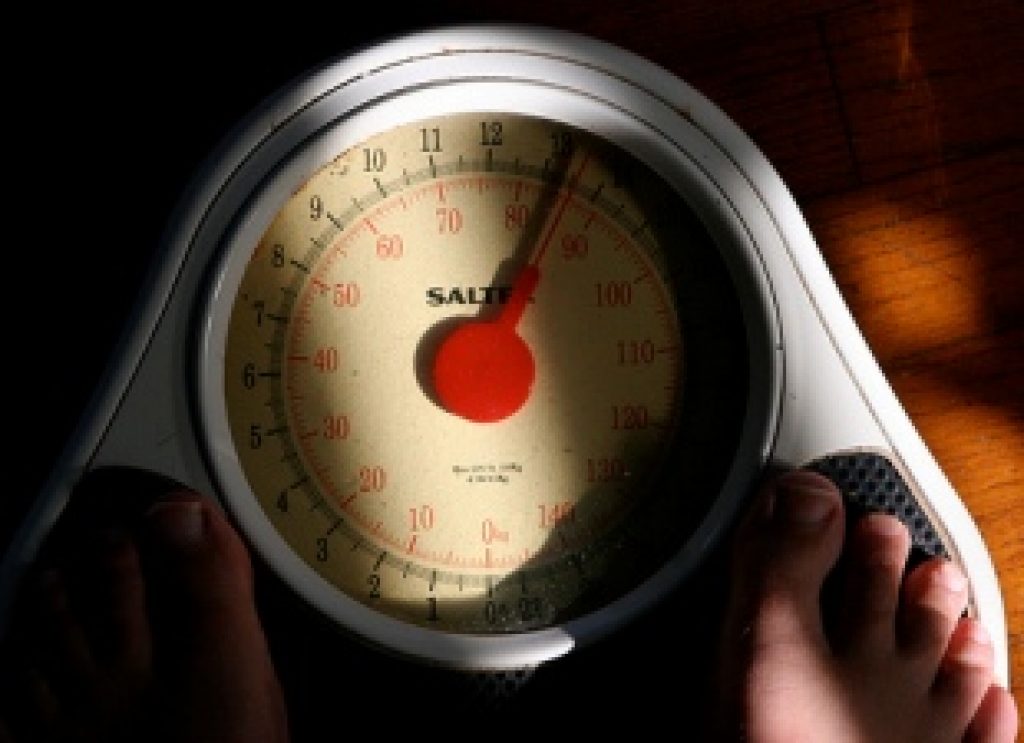
Asian Scientist (Sep. 24, 2013) – Scientists from Monash University in Australia have found that the stress hormone cortisol may act as a predictor of people susceptible to rapid weight gain.
The predictive test for obesity will undergo human trials at Monash University and is currently in the recruitment phase.
The study, published in the Journal of the Federation of American Societies for Experimental Biology (FASEB), identified a predictive marker for people prone to obesity. This group of people are also a subset that struggle the most to lose weight.
The test determines whether individuals in a normal population have high cortisol responses to an injection of a hormone (adrenocorticotropin) that stimulates adrenal gland secretion of cortisol.
Such a test can be performed over two hours and would allow early intervention to prevent weight gain, including exercise, diet and stress reduction.
Currently the only effective treatment for obesity is surgical intervention. Efforts to curtail food intake by pharmacological means have failed, but relatively little attention has been paid to energy expenditure.
Targeting energy expenditure for therapeutic intervention may provide a solution to the escalating problem and this is where the group have identified individual differences.
It has long been known that, under stress, most people overeat with only about 10-15 per cent losing their appetite in response to stress.
Tests on an animal model revealed that ‘high responders’ to the stress hormone cortisol were most likely to gain weight on a diet that promotes obesity.
The researchers also found that high responders to cortisol had lower energy expenditure in their muscles compared to low responders.
This may explain why those that eat more in response to stress also take longer to lose the excess weight.
“Skeletal muscle represents 40 per cent of the body mass. If a person is a ‘high responder’ to stress then they are more likely to eat themselves to obesity and are also likely to have more trouble losing that weight as their muscles are slow to burn energy,” said Dr Belinda Henry, the senior author of the study.
“If we are able to predict who is most likely to end up obese – particularly in response to stressful events – then we can intervene early to prevent this as well as other complications associated with weight gain such as heart disease, cancer and diabetes.”
The article can be found at: Lee et al. (2013) High Cortisol Responses Identify Propensity For Obesity That Is Linked To Thermogenesis In Skeletal Muscle.
——
Source: Monash University; Photo: puuikibeach/Flickr/CC.
Disclaimer: This article does not necessarily reflect the views of AsianScientist or its staff.