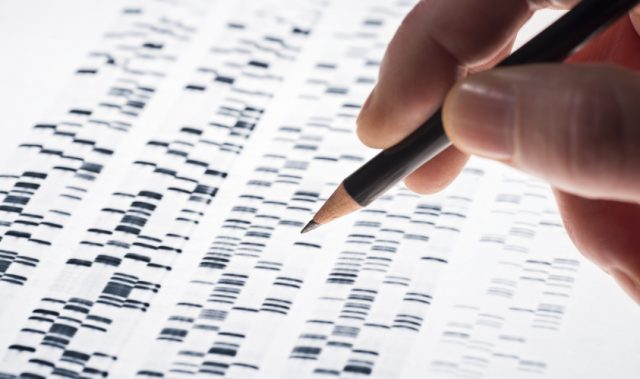
AsianScientist (Sep. 23, 2011) – Researchers have isolated DNA from a lock of hair of an Aboriginal man from the Goldfields region of Western Australia in the early 20th century.
From the lock of hair, which was donated to a British anthropologist, researchers explored the genetics of the first Australians to provide insights into how humans first dispersed across the globe. The results, published in the journal Science, re-interpret the prehistory of our species.
The genome reveals that the ancestors of the Aboriginal man separated from the ancestors of other human populations some 64,000 to 75,000 years ago, at least 24,000 years before the population movements that gave rise to present-day Europeans and Asians.
The results imply that modern day Aboriginal Australians are in fact the direct descendants of the first people who arrived in Australia as early as 50,000 years ago, and in showing this, establishes Aboriginal Australians as the population with the longest association with the land on which they live today.
Previously, the most widely accepted theory was that all modern humans derive from a single out-of-Africa migration wave into Europe, Asia, and Australia. In that model, the first Australians would have branched off from an Asian population, already separated from the ancestors of Europeans.
However, this study shows that when ancestral Aboriginal Australians begun their private journey, the ancestors of Asians and Europeans had not yet differentiated from each other. Once they did, some 24,000 years after the first Australians had begun their explorations, Asians and remnants of the ancestral Australians intermixed for a period of time.
“Aboriginal Australians descend from the first human explorers. While the ancestors of Europeans and Asians were sitting somewhere in Africa or the Middle East, yet to explore their world further, the ancestors of Aboriginal Australians spread rapidly; the first modern humans traversing unknown territory in Asia and finally crossing the sea into Australia,” said Prof. Eske Willerslev from the University of Copenhagen, who headed the study.
This research, endorsed by the Goldfields Land and Sea Council, the organization that represents the Aboriginal traditional owners for the region, has wide implications for understanding of how our human ancestors moved across the globe.
So far the only ancient human genomes have been obtained from hair preserved under frozen conditions. The researchers have now shown that hair preserved in much less ideal conditions can be used for genome sequencing without risk of modern human contamination that is typical in ancient bones and teeth.
The article can be found at: Rasmussen M et al. (2011) An Aboriginal Australian Genome Reveals Separate Human Dispersals into Asia.
——
Source: BGI China.
Disclaimer: This article does not necessarily reflect the views of AsianScientist or its staff.