AsianScientist (Aug. 24, 2011) – The universe forms fewer stars than it used to, and an Australian study has now shown why – the galaxies are running out of gas.
Dr. Robert Braun at the CSIRO Astronomy and Space Science and his colleagues used CSIRO’s Mopra radio telescope near Coonabarabran, New South Wales to study far-off galaxies and compare them with nearby ones.
Light (and radio waves) from the distant galaxies has taken time to travel to us, so we see the galaxies as they were between three and five billion years ago.
According to the research team, galaxies at this stage of the universe’s life appear to contain considerably more molecular hydrogen gas than comparable galaxies in today’s universe.
Astronomers have known for at least 15 years that the rate of star formation peaked when the universe was only a few billion years old and has declined steeply ever since. The less molecular hydrogen there is, the fewer stars will form.
After stars form, they shed gas during various stages of their lives, or in dramatic events such as explosions (supernovae). This returns some gas to space to contribute to further star formation.
“But most of the original gas – about 70 percent – remains locked up, having been turned into things such as white dwarfs, neutron stars and planets,” he said.
“So the molecular gas is used up over time. We find that the decline in the molecular gas is similar to the pattern of decline in star formation, although during the time interval that we have studied, it is declining even more rapidly.”
Ultimately, the real problem is the rate at which galaxies are ‘refueled’ from outside.
Gas falls into galaxies from the space between galaxies, the intergalactic medium. Two-thirds of the gas in the universe is still found in the intergalactic medium and only one third has already been consumed by previous star formation in galaxies.
Up until that time, gravity dominated the universe, so the gas was naturally pulled in to galaxies, but then the effect of Dark Energy took over and the universe started expanding faster and faster. This accelerating expansion would have made it increasingly difficult for galaxies to capture the additional gas they need to fuel future generations of star formation, Dr. Braun speculates.
The galaxies used for the Mopra study are called ultra-luminous infra-red galaxies or ULIRGs, chosen because they are known to have large reservoirs of gas and because they are so bright that the team could take a complete census of all of them within the volume of the universe studied.
The article can be found at: Braun R et al. (2011) Molecular gas in intermediate-redshift ultraluminous infrared galaxies.
——
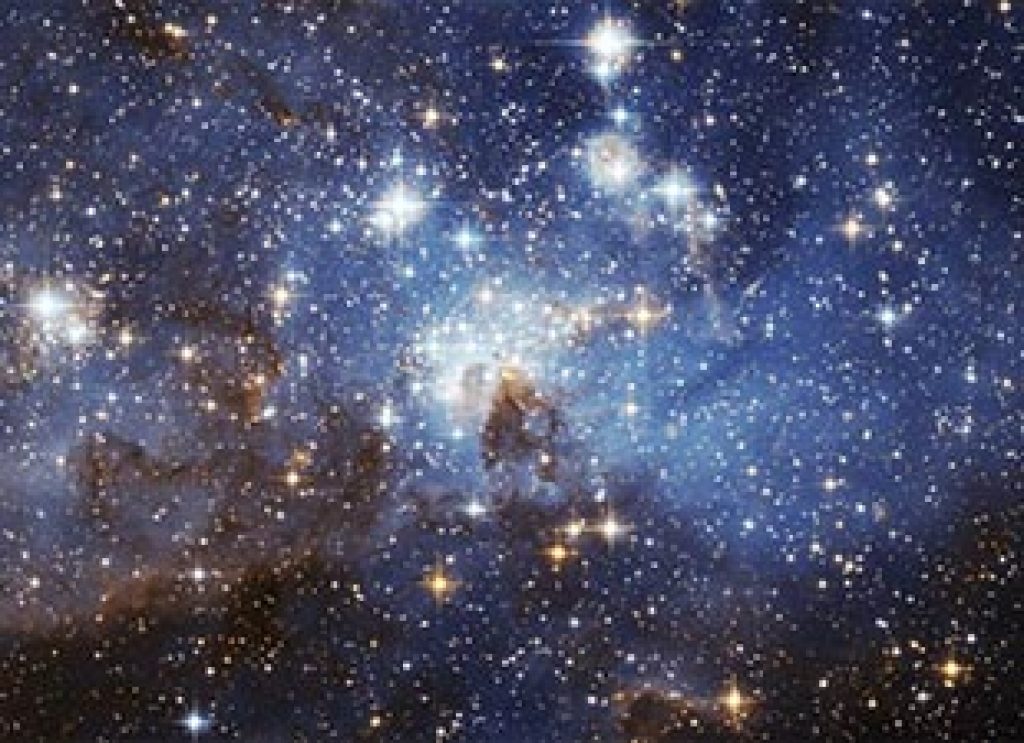
Source: CSIRO; Photo: NASA, ESA, STScI/AURA.
Disclaimer: This article does not necessarily reflect the views of AsianScientist or its staff.