AsianScientist (Jul. 11, 2018) – By Kareyst Lin – For students who have been cocooned in the safe space of a college environment, internships can provide valuable experience of the working world. Data science internships are highly sought after, as studying machine learning in a classroom setting cannot be compared to applying it to solve real client problems.
Yet, hopefuls for data science internships will need to have more than just technical skills under their belts, said Mr Ng Sing Kwan, vice president, data science at e-commerce company Lazada.
“A lot of people think that to be a good data scientist, they just need to have good coding skills and understand machine learning statistical concepts. But what they lack—and what we look out for—are problem-solving skills and business acumen,” he said.
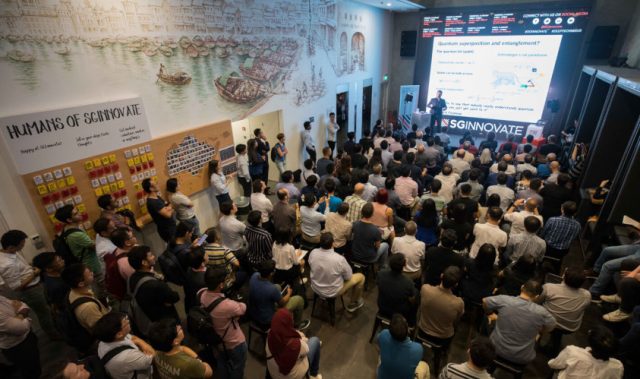
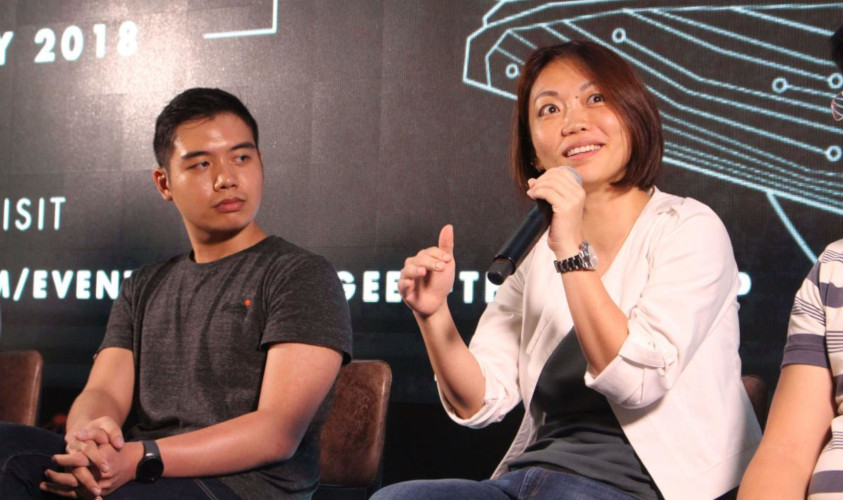
Mr Ng, who transited from a business background to data science, was speaking at a panel discussion titled ‘What Does It Take To Land The First Data Science Job/Internship?’, organised by volunteer-led data analytics community Analytics.Club Singapore in partnership with SGInnovate.
Moderated by Dr Michal Polanowski, senior manager, data science at Lazada, the panel also comprised Ms Veronica Puah, deputy director, talent networking at SGInnovate; Mr Bryan Lim, data scientist at Lazada; and Ms Xia Rui and Mr Ang Zhen Xuan, third-year National University of Singapore students interning at Lazada and Micron Technology respectively.
Do: Stand out from the crowd
Agreeing with Mr Ng, Ms Puah said that applicants for internships or entry-level positions need something that will differentiate them from their peers.
“[At entry level] I would say everyone is more or less on the same playing field as far as academics are concerned. Therefore, in order to stand out from the pool of applicants, you need to have done something extra outside of your fixed curriculum at school, be it personal projects or online courses you have completed.”
Ms Puah added that she also looks out for how the candidate articulates and presents these additional skills they have picked up.
“Fundamentally, beyond just skillsets, we really want you to show us that you have the passion and drive to take extra steps towards what you are interested in.”
Speaking from his own work experience, Lazada’s Mr Lim emphasised the importance of being a team player.
“In a data science unit, you need to work as a team. Over the course of a project, everyone has to bring something to the table. So it is not just about your skills, but also how you can work with team members, how open you are to new ideas, and whether you can learn new things in the workplace,” he said.
Do: Prep for the interview
Of course, landing an internship requires undergoing what for many is a stressful rite of passage: the job interview. According to interns Ms Xia and Mr Ang, being well prepared for the interview doesn’t only entail knowing what to say—it is just as important to know what not to say.
“If you can’t answer a question posed to you by the interviewer, you should just admit that you don’t know,” said Mr Ang, who shared that he learned this the hard way. “It happened to me once—I tried to fluff my way through my answer to a pretty technical question and the interviewer actually asked me if I knew what I was talking about.”
Ms Xia also advised the audience to be prepared to answer questions based on the content of their resumes, as interviewers often probe into what candidates claim to have done in the past.
She recalled her own interview for her current internship at Lazada.
“I wrote in my resume that I joined a competition on data prediction, and the interviewer actually asked me about technical details such as the parameters used during the competition. I was caught off guard because I didn’t remember them. Luckily, they were kind enough to let me refer to my laptop, but this might not be the case for every interviewer.”

Don’t: Pad your resume
At many workplaces, the interview is not the only thing that candidates need to prepare for. At SGInnovate, for example, the selection process is usually broken down into multiple stages, including technical assessments for technical roles, shared Ms Puah.
“Sometimes, the initial assessment can take the form of an online assignment instead of on-site coding. It is perfectly fine to do effective research and refer to resources on GitHub to answer the question, but you need to at least understand the answer, not just copy and paste it,” she said.
This is because the same question might be posed during face-to-face interviews, and it would not reflect well on candidates if they are unable to explain their own answers, she added.
Finally, Mr Ng advised candidates to be selective about what they list in their resumes.
“I have seen resumes from fresh graduates comprising a massive laundry list of every popular programming language out there, from Java to C++ to Python and so on. They go on to claim that they know machine learning techniques, deep neural networks and more. Yet, realistically, not even someone with ten years of professional experience in the field, or a PhD holder, could have pulled off such a list.”
In this case, more is not better, said Mr Ng.
“Don’t just dump everything you have come across in the past into your resume and call it a skillset. It’s not the same as knowing how to use Microsoft Word or PowerPoint—you just can’t mention things such as neuro-linguistic programming casually in your resume. This is especially so for someone who is looking for their first job—there is no way you can be skilled in every single programming language.”
It’s easy to get caught up in the race to acquire ever more technical skillsets. But for someone looking to land their first data science job, the panellists agreed that a proactive and eager-to-learn attitude is what will get applicants noticed, even if they don’t have an extensive portfolio or industry experience.
“It’s OK if you don’t know or are not too familiar with certain things. But at the end of the day, we want someone who takes the initiative to do their own research to close the gap,” said Ms Puah in conclusion.
At SGInnovate, we are always looking to draw talent to the deep tech space. Our SGInnovate Summation Programme is a three-to-six-month apprenticeship that will enable students to work alongside software and engineering professionals on deep tech projects. Applications for our next run start in July. Find out more about the programme here.
Asian Scientist Magazine is a content partner of SGInnovate.
———
Copyright: SGInnovate. Read the original article here.
Disclaimer: This article does not necessarily reflect the views of AsianScientist or its staff.