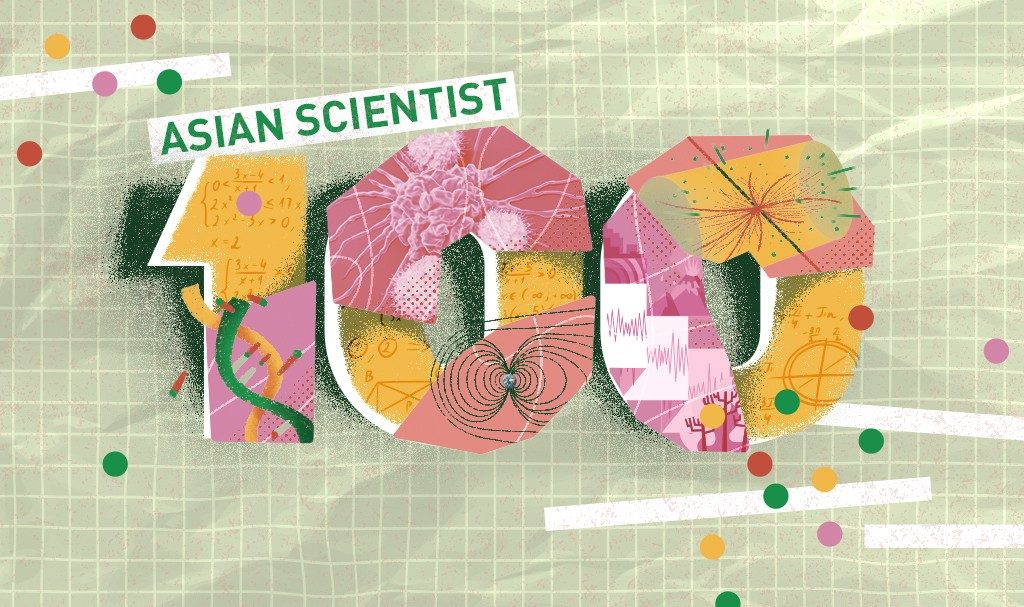
AsianScientist (Jun. 04, 2026)–Asian Scientist Magazine is thrilled to announce its 2026 edition of Asian Scientist 100— our annual tradition of spotlighting Asia’s best scientists. This edition is our 11th list. It features trailblazers and leaders in STEM and the rising stars already dazzling their fields. The honorees include scientists doing pathbreaking research in fields such as epigenetics, magnetospheres, immune cells, disaster risk reduction, algebra and high-energy physics.
This year’s diverse list presents scientists from countries across Asia including Sri Lanka, China, India, Japan, Singapore, Taiwan, Japan, Malaysiam Vietnam, South Korea, Pakistan, Bangladesh, Hong Kong SAR, Indonesia, the Philippines, Maldives and Combodia.
The edition has Nobel Prize winners like Shimon Sakaguchi, Professor at the University of Osaka in Japan. Sakaguchi shared the 2025 Nobel Prize in Physiology or Medicine with Mary Brunkow, who is a molecular biologist at the Institute for Systems Biology, Seattle, USA, and Fred Ramsdell, Chief Scientific Officer, Sonoma Biotherapeutics, San Francisco, USA, for their fundamental discoveries “concerning peripheral immune tolerance,” a fundamental mechanism that prevents the immune system from attacking the body’s own tissues. The trio identified and characterized regulatory T cells (Tregs)—immune cells that act as key brakes on immune responses—and elucidated the central role of the FOXP3 gene in their development and function. Sakaguchi had first demonstrated the existence of these cells in 1995, challenging the belief that self-tolerance was mediated solely in the thymus.
We highlighted many women leaders including Shaahina Ali, an environmental advocate from Maldives. She was honored with the 2025 Ramon Magsaysay Award for her transformative leadership in marine conservation in the Maldives. She mobilized a nationwide movement to combat plastic pollution through community-driven initiatives, including hundreds of coastal cleanups and school-based recycling programs. Her leadership has united citizens, businesses and institutions to protect fragile ocean ecosystems, demonstrating how grassroots action can drive sustainable environmental stewardship and inspire long-term conservation across island communities.
Then there is Chwee Teck Lim, Professor at the National University of Singapore. Lim received the President’s Science Award 2025, Singapore’s top scientific honor, for pioneering contributions to mechanobiology, microfluidics and wearable medical technologies that enable earlier disease detection and precision therapy. In the same year, he was elected an International Fellow of the Royal Academy of Engineering and received the 2025 Otto Schmitt Award, recognising his leadership and seminal contributions to medical and biological engineering. Lim’s research has translated fundamental discoveries into practical healthcare solutions, including biochips for capturing circulating tumor cells and flexible diagnostic devices, helping advance minimally invasive diagnostics and global health technologies.
Like biomedical research, environmental protection and disaster risk reduction remain some of the key scientific areas where the Asian Scientist Magazine spotlights scientists. This year’s list included Harkunti Pertiwi Rahayu, Professor at Sumatera Institute of Technology in Indonesia. Rahayu was named the 2025 laureate of the prestigious United Nations Sasakawa Award for Disaster Risk Reduction. Recognized for her decades-long commitment to strengthening disaster preparedness in Indonesia and the Asia-Pacific region, Rahayu has played a pivotal role in integrating science into policy and community-based resilience strategies. Her work has significantly influenced national and regional disaster risk governance, particularly in tsunami early warning systems and urban resilience. The award celebrates her outstanding contributions to reducing disaster risk and enhancing sustainable development efforts.
This 11th edition of AS100 also included young researchers like Hsiang-Yi Yang, associate professor at the National Tsing Hua University in Taiwan. Yang received the 2025 Taiwan Outstanding Women in Science Rising Star Award for her research in astrophysics, using advanced simulations to study black hole jets and their influence on galaxy and galaxy cluster evolution.
To be included on the Asian Scientist 100, honorees must have been awarded a national or international prize in 2025. Alternatively, they must have achieved a significant accomplishment in scientific discovery or leadership in scientific enterprise.
We are grateful to Asian Scientist Magazine’s International Advisory Committee for their support in helping us create a diverse and equitable Asian Scientist 100 list.
The list, in no order of merit, is available online here.
—
Illustration: Yipei Lieu /Asian Scientist Magazine.
Copyright: Asian Scientist Magazine.