AsianScientist (Jul. 13, 2018) – A Japanese-led research group has discovered a previously unknown structural class of compounds in a jungle-dwelling shrub. Their findings are published in Organic Letters.
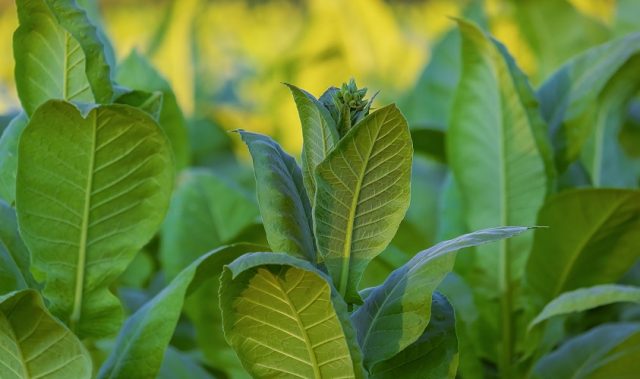
The glossy or red-fruited laurel (Cryptocarya laevigata) inhabits the rainforests of eastern Australia. Little was known about the chemical makeup of this tall shrub until researchers led by Associate Professor Kyoko Nakagawa-Goto at Kanazawa University, Japan, analyzed an extract of the C. laevigata’s twigs and leaves. The plant’s essential oil was found to contain a family of six new compounds.
Using a technique known as nuclear magnetic resonance, the researchers showed that at the center of the compounds lay a peculiar, nine-membered carbon structure known as a spiro-nonene. This structure consists of two rings of carbon atoms—one containing six atoms, the other four—linked by a single ‘pinch point’ atom that is a part of both rings. This motif had never been seen before in any natural product.
Four-carbon rings—cyclobutanes—are rare because of their unstable structure. Carbon generally prefers to build larger rings, which are less strained. A few cyclobutanes do exist in nature. However, the Kanazawa team thinks that C. laevigata cyclizes these compounds in a unique way, resulting in nine-membered rings.
The C. laevigata products also contain lactone groups—cyclic esters—prompting the name of these compounds, cryptolaevilactones. Esters are often associated with fruity aromas and perfumery. Three of the compounds contain bicyclic lactones, where the ester is cyclized into two interlocking rings.
However, the researchers want to verify whether these compounds are artifacts of the purification process with further experiments.
“Nature is often the most inventive organic chemist,” said Nakagawa-Goto. “In our lab, we’re still working on synthesizing these cryptolaevilactones from scratch. In fact, we have yet to fully establish the chirality. The absolute configuration between the cyclobutane and lactone is unclear. Once we have produced larger amounts, which are not available from the plant extracts, we can test them for useful biological activity.”
The article can be found at: Tsurumi et al. (2018) Secondary Metabolites, Monoterpene–Polyketides Containing a Spiro[3.5]nonane from Cryptocarya laevigata.
———
Source: Kanazawa University; Photo: Peter Woodard/Wikimedia Commons/CC0.
Disclaimer: This article does not necessarily reflect the views of AsianScientist or its staff.