AsianScientist (July 25, 2017) – Researchers at Tokyo Institute of Technology have devised a low-cost approach to developing all-solid-state batteries. They published their findings in the journal Chemistry of Materials
Ever since batteries were invented over 200 years ago, there has been a drive to improve their quality and performance at reduced costs. Compared to common lithium-ion batteries that contain conducting liquids, all-solid-state batteries of the future promise a suite of advantages: Improved safety and reliability, higher energy storage and longer life cycles.
The discovery of ‘superionic’ conductors—solid crystals that enable fast movement of ions—is spurring the development of such dream batteries. However, promising designs have so far relied on the use of rare metals such as germanium, making them too expensive for large-scale applications.
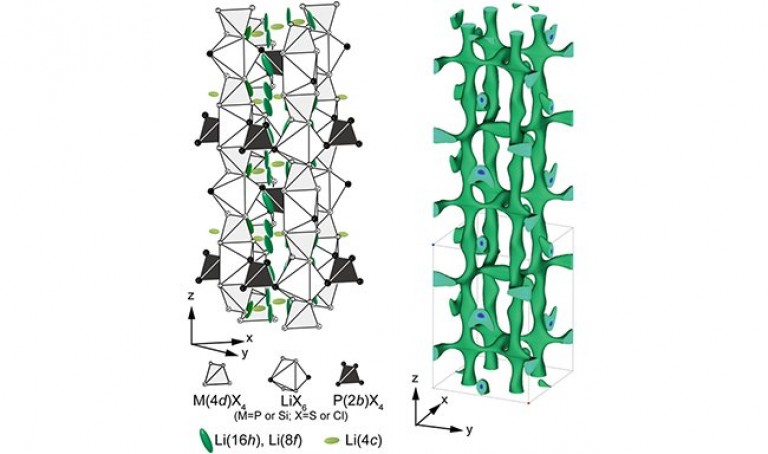
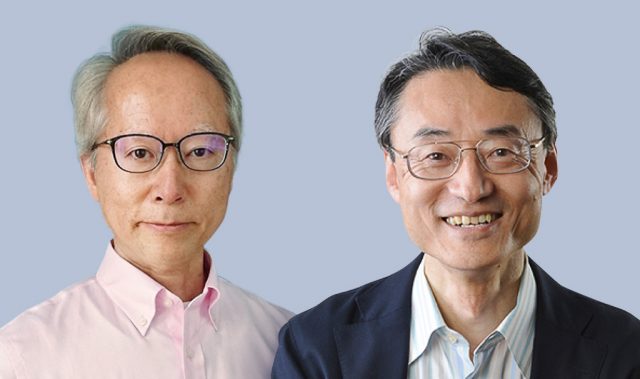
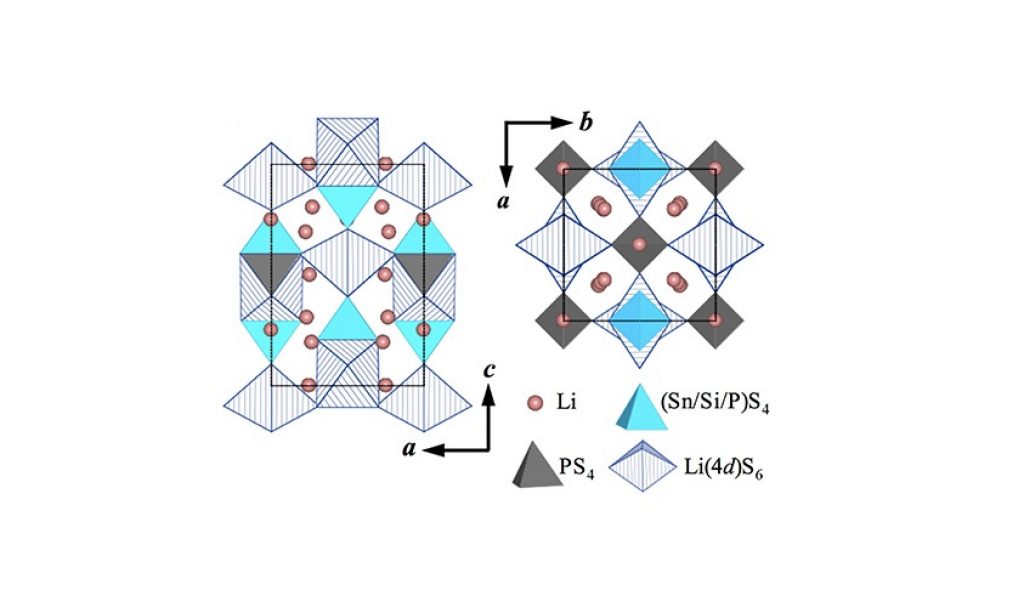
Professor Ryoji Kanno and colleagues at the Tokyo Institute of Technology have developed a new material using a low-cost, scalable approach that involves substituting germanium with two readily available elements: Tin and silicon. The new material achieved an ionic conductivity exceeding that of liquid electrolytes.
“This germanium-free lithium conductor could be a promising candidate as an electrolyte in all-solid-state batteries,” said the team.
Due to its high chemical stability and ease of fabrication, Kanno said that their new material widens the possibilities of fine-tuning solid electrolytes to meet diverse industry and consumer needs.
Although further work will be required to optimize performance for different usage purposes, the new material raises hopes for low-cost production without sacrificing performance.
Kanno envisions that in addition to meeting current battery needs across all sectors, all-solid-state batteries will expand the possibilities of responding to new user needs arising from the Internet of Things (IoT) and the shift towards smart systems, as well as powering robots, drones and space and aircraft technologies among others in future.
The article can be found at: Sun et al. (2017) Superionic Conductors: Li10+δ[SnySi1-y]1+δP2-δS12 with a Li10GeP2S12-type Structure in the Li3PS4-Li4SnS4-Li4SiS4 Quasi-ternary System.
———
Source: Tokyo Institute of Technology.
Disclaimer: This article does not necessarily reflect the views of AsianScientist or its staff.