AsianScientist (Jan. 24, 2017) – Gut bacteria in the cotton leafworm produce a powerful antimicrobial peptide that helps to protect the host. These findings have been published in Cell Chemical Biology.
“It has long been proposed that native gut bacteria are an important component of host defense, but until now, the responsible species and molecular mechanism have not been clearly demonstrated,” said first author Dr. Shao Yongqi of Zhejiang University.
“We show that the evolutionary success of insects is partially based on a symbiotic association with gut microbes, which co-evolved with their hosts over millions of years.”
Insects are the largest group of animals on Earth, with over a million known species. As the most significant herbivores in the world, insects ingest microbes commonly found in plants or the surrounding environment, yet they are remarkably resistant to infections.
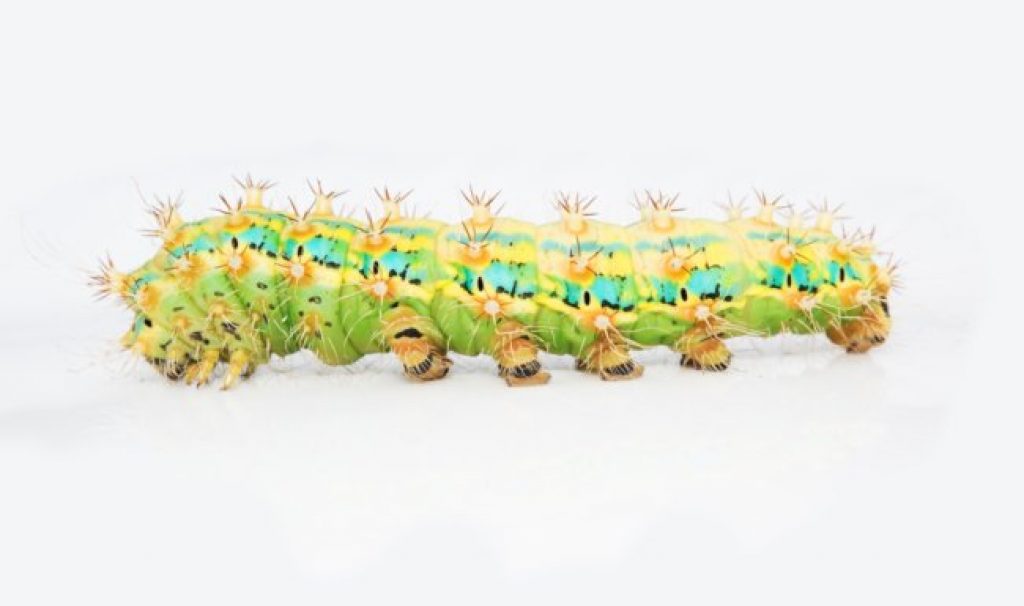
A clue to this question came while Shao and senior study author Wilhelm Boland of the Max Planck Institute for Chemical Ecology were studying the cotton leafworm, Spodoptera littoralis, which is one of the most widespread insect herbivores in the temperate regions and causes substantial economic losses in crop production.
They noticed that the composition of gut microbes colonizing this pest changes dramatically during larval development. Whereas young larvae were inhabited by a variety of virulent Enterococcus species, older larvae were dominated by E. mundtii, which has rarely been documented as a pathogen.
Based on these intriguing observations, the researchers set out to identify the factors that influence the composition of gut microbes during insect development. They discovered that E. mundtii inhibited the growth of other related bacterial species by secreting an antimicrobial peptide called mundticin KS. While this toxin was undetectable in young larvae, it dramatically increased in abundance in older larvae due to expansion of the E. mundtii population, shaping the microbiome with surprising efficiency.
“The antimicrobial promotes symbiosis by providing a competitive advantage for E. mundtii, contributing to its dominance in the gut microbiome, while protecting the cotton leafworm against pathogens,” Boland said. “We expect that protective associations with antibiotic-producing bacteria is a common strategy of insects against microbial invaders.”
In future studies, the researchers will examine whether similar mechanisms exist in other insect species and look for additional toxic compounds that shape the microbiome during host development. In the end, the findings could have widespread implications for agriculture and health. For example, antimicrobial peptides could be used as food preservatives, and understanding the role of indigenous gut residents could contribute to the development of novel biocontrol strategies against herbivorous insect pests.
“Our study also provides interesting approaches for medical research,” Shao said. “Many conventional antibiotics are facing increasing problems of resistance. As evolutionarily conserved weapons, bacteriocins have great potential as alternatives to conventional antibiotics.”
The article can be found at: Shao et al. (2017) Symbiont-Derived Antimicrobials Contribute to the Control of the Lepidopteran Gut Microbiota.
———
Source: Cell Press; Photo: Shutterstock.
Disclaimer: This article does not necessarily reflect the views of AsianScientist or its staff.