AsianScientist (May 30, 2016) – Chemists from Japan have helped to solve a perennial problem that many people face: batteries that fail to work at below-freezing temperatures.
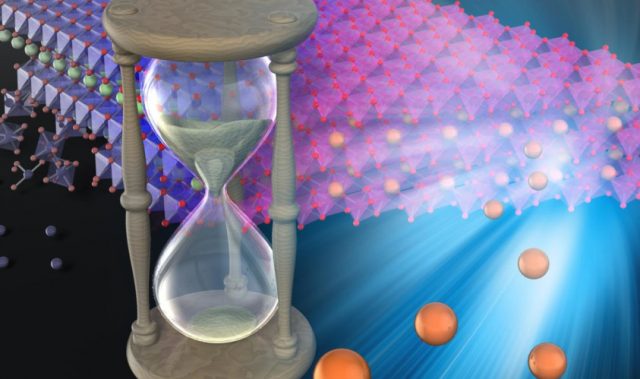
Their eco-friendly organic radical battery, produced by a new synthesis method, is not only rechargeable but could also provide a portable source of power in refrigerated factories or extreme winter environments.
Most electrical devices use lithium ion batteries, which are safer than standard lithium metal batteries. But these batteries still require the use of metals, a finite resource that is in decreasing supply.
Organic radical rechargeable batteries, on the other hand, have the potential to be cheaper, safer and longer-lasting than current metal-based batteries. They also take one minute to charge up instead of one hour, as they carry energy chemically rather than physically.
“The chemicals in the battery make it heavy and the synthesis process makes it expensive, so it won’t replace other styles of batteries in the foreseeable future,” explained Professor Yohsuke Yamamoto from Hiroshima University, whose team invented the battery.
“But our battery could supplement traditional batteries in conditions where traditional lithium ion batteries can’t work reliably, particularly in cold locations.”
The new synthesis method developed by the Hiroshima group is modeled on a process first reported in 1985 by an American research group, where Yamamoto was a member in the late 1980s.
“The original method we used took such a long time and relied on harmful chemicals. Now, over 20 years later, we can synthesize the compound much more quickly and safely,” he said. “Fundamental research on unstable compounds creates a more detailed understanding of how chemicals bond. Applications like this new battery are the results of research that was never originally about any specific end product.”
Eventually, organic radical batteries could be made in flexible, transparent forms for use in wearable electronics, Yamamoto said. His team is now adapting the synthesis process further to make the battery lighter weight and ensure it retains its energy output after numerous recharge cycles.
The article can be found at: Imada et al. (2016) Easy Access to Martin’s Hypervalent Sulfur Anions toward an Electrode Material for Organic Rechargeable Batteries.
———
Source: Hiroshima University; Photo: Shutterstock.
Disclaimer: This article does not necessarily reflect the views of AsianScientist or its staff.