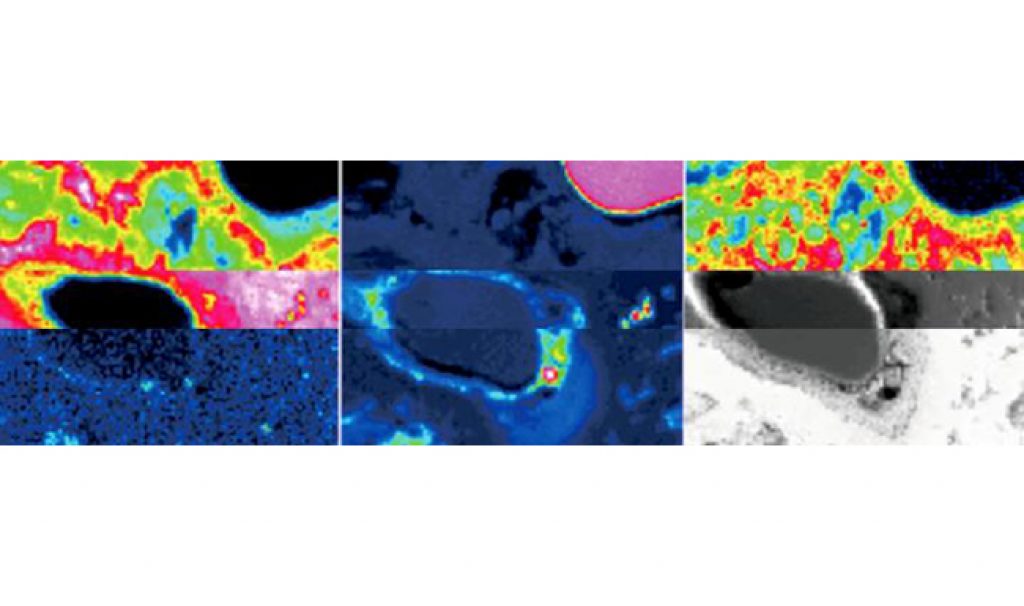
AsianScientist (May 24, 2016) – Japan is now a step closer to decommissioning the Fukushima Daiichi Nuclear Plant. Japanese researchers have mapped the distribution of boron compounds in a model control rod, paving the way for determining re-criticality risk, or the risk of reaching critically dangerous conditions, within the reactor. Their findings were published in Scientific Reports.
To this day, the precise situation inside the Fukushima Daiichi Nuclear Plant is still unclear.
“Removing fuel debris from the reactor contaminant vessel is one of the top priorities for decommissioning,” said lead author Dr. Ryuta Kasada of Kyoto University.
Stainless steel tubes filled with boron carbide are used to control energy output in boiling water reactors—including at Fukushima Daiichi—as boron absorbs neutrons resulting from splitting atoms. With such control rods functioning properly, nuclear fission occurs at a steady rate.
In an extreme situation, such as during the Fukushima accidents, where overheated vapors come in contact with the rods, boron reacts with surrounding materials like stainless steel to create molten debris.
“When melting happens, phenomena like relocation occur such that the boron atoms, trapped in the debris, accumulate towards the bottom of the reactor,” explained Kasada. “This can lead to a lack of control agents in the upper core structure and thus a higher risk of re-criticality in those areas.”
“It’s crucial to get a picture of how boron atoms are distributed inside the reactor, so that we know which areas have higher risk of re-criticality. It’s also important to know the chemical state of boron, as some boron compounds can affect the formation of radioactive materials released to the environment.”
Kasada and colleagues filled a model control rod with steam at 1,250°C to imitate conditions of a severe nuclear accident. The team then mapped the distribution of molten boron debris and simultaneously determined its chemical state with a soft x-ray emission spectrometer, in which they combined a new diffraction grating with a highly-sensitive x-ray CCD camera, equipped to a type of scanning electron microscope.
The boron compounds—including boron oxide, boron carbide, and iron boride—each showed different peak structures on the x-ray spectrum.
“Previously this was only possible to visualize in large synchrotron radiation facilities. We’ve shown that the same is possible with laboratory-sized equipment,” Kasada said.
According to Kasada, this finding demonstrated on a micro-scale what needs to be done in Fukushima.
“This can’t yet be applied in the field, but in the meantime, we plan to visualize the chemical state of other elements so as to create a sound materials base for decommissioning Fukushima,” he said.
The article can be found at: Kasada et al. (2016) Chemical State Mapping of Degraded B4C Control Rod Investigated with Soft X-ray Emission Spectrometer in Electron Probe Micro-analysis.
———
Source: Kyoto University.
Disclaimer: This article does not necessarily reflect the views of AsianScientist or its staff.