AsianScientist (Apr. 1, 2016) – Japanese scientists have synthesized two crystal materials that show great promise as solid electrolytes. All-solid-state batteries built using the solid electrolytes exhibit excellent properties, including high power and high energy densities, and could be used in long-distance electric vehicles. These findings have been published in Nature Energy.
High power batteries must be rechargeable, remain safe to store and use at variable temperatures, and retain charge for a considerable length of time. Now, Yuki Kato and Ryoji Kanno in collaboration with colleagues from Toyota Motor Corporation, Tokyo Institute of Technology and High Energy Accelerator Research Organization Japan (KEK), have successfully designed and trialled novel, high power all-solid-state batteries with promising results.
Most traditional batteries rely on the flow of ions through a liquid electrolyte between two electrodes; lithium-ion batteries used in mobile phones would be one example of this type of battery.
However, batteries incorporating a liquid electrolyte are prone to problems, including low charge retention and difficulties in operating at high and low temperature. Previous designs for solid electrolytes have shown promise, but have proven expensive and some have exhibited problems with electrochemical stability.
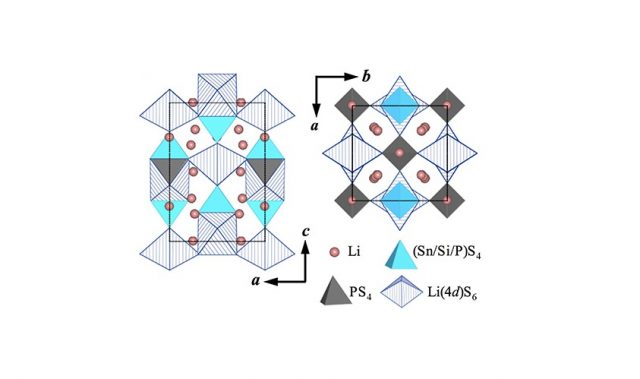
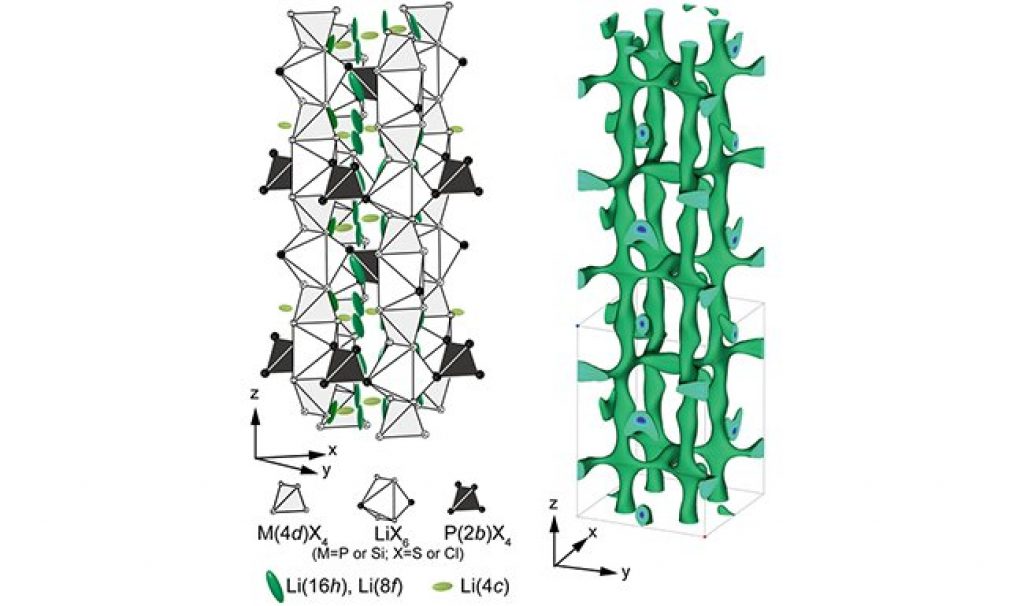
Based on a previously discovered crystal structure, Kato and his team synthesized two new lithium-based ‘superionic’ materials: Li9.54Si1.74P1.44S11.7Cl0.3 and Li9.6P3S12. They studied these crystal structures using Synchrotron X-ray diffractometer, BL02B2, at SPring-8 and neutron diffractometer iMATERIA(BL20) at J-PARC.
Superionic materials are solid crystal structures through which ions can ‘hop’ easily, essentially maintaining a flow of ions similar to that which occurs inside a liquid electrolyte. They showed how the lithium ions move fast in the structure of their compounds even at room temperature.
Both superionic materials developed by the team showed extremely high ionic conductivity and high stability. The researchers used their two new solid electrolytes to create two battery cell types; one high-voltage cell and one cell designed to work under large currents.
Both all-solid-state cell types exhibited superior performance compared with lithium ion batteries, operating very well at temperatures between -30 and 100°C. Kato’s team found that the cells provided high power density, with ultrafast charging capabilities and a longer lifespan than existing battery types.
Furthermore, the cells exhibited ultrafast charging, retained their charge for lengthy periods, and appeared to have a long lifespan with excellent cycling ability (after over 500 cycles, the cells retained around 75 percent of their initial discharge capacity).
Although the technology requires further development before it is commercially available, these promising results indicate that all-solid-state batteries may soon provide a much-needed boost to applications requiring stable, long-life energy storage.
The article can be found at: Kato et al. (2016) High-Power All-Solid-State Batteries Using Sulfide Superionic Conductors.
———
Source: Tokyo Institute of Technology.
Disclaimer: This article does not necessarily reflect the views of AsianScientist or its staff.