AsianScientist (Mar. 31, 2016) – While international trade may generate economic benefits to the exporting countries, a recent study by researchers from the National University of Singapore (NUS) revealed that benefits from trade are unable to compensate for the loss of forests and ecosystems in those countries. Their findings have been published in Ambio.
By quantifying the impact of international trade on ecosystem services, the research team, led by Assistant Professor Roman Carrasco showed that tropical countries are severely underpricing the agricultural commodities they produce, and thus effectively subisidizing consumption by importing countries. The results can be used to support agricultural export and land-use policies in tropical countries.
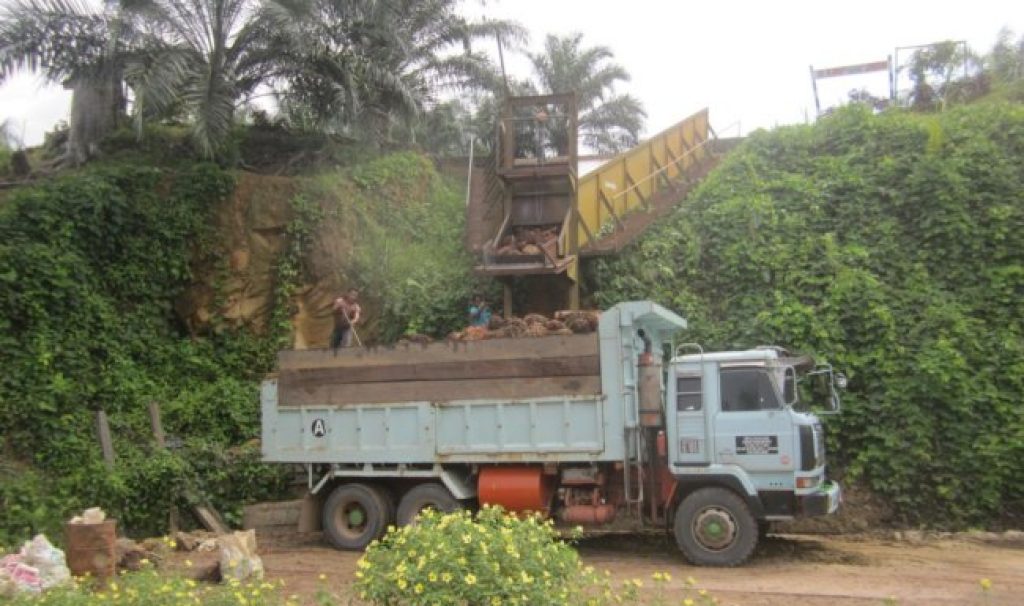
Since the late 20th century, global trade volume has grown exponentially, increasing the demand for agriculture, crop and livestock products. To produce the supply, tropical countries have been converting their forests for crop and livestock production, leading to a loss of biodiversity and ecosystem services, such as carbon sequestration, flood protection or pollination, while increasing carbon dioxide emissions.
In this study, the NUS team analysed data from 85 countries, combining estimates of the land used in tropical countries to produce the commodities for export. They also embedded the countries’ imports; the biome that would be present if deforestation had not taken place; the benefits generated by agriculture and timber through trade; and the losses from forgone ecosystem services.
The study showed that the majority of tropical countries incur huge net economic losses amounting to US$1.7 trillion each year. Topping the list are countries such as Brazil, Thailand, India, Vietnam and Indonesia, where large areas of land are used for producing timber, crops and livestock for export.
“Deforestation is supported under the assumption that the countries are better off by engaging in agricultural activities,” Carrasco explained.
“However, our findings show that this is not necessarily the case. This points to the urgency for tropical countries to rethink their land-use strategies. Without incorporating the environmental costs into international trade, deforestation beyond optimal levels will continue and may lead to serious environmental consequences.”
After quantifying the problem of rapid tropical deforestation due to agricultural expansion, the team is currently assessing steps that can be taken to reduce the environmental costs of deforestation while still meeting the global demand for livestock and agricultural products.
“Some of the potential measures that can be adopted include the introduction of an ecosystem services tax on international trade, price premiums for environmentally friendly agricultural produce, or agricultural intensification to spare land,” Carrasco said.
The article can be found at: Chang et al. (2016) International Trade Causes Large Net Economic Losses in Tropical Countries via the Destruction of Ecosystem Services.
———
Source: National University of Singapore.
Disclaimer: This article does not necessarily reflect the views of AsianScientist or its staff.