AsianScientist (Jan. 4, 2016) – A team of researchers led by Zhu Yongguan from the Chinese Academy of Sciences has discovered that arsenic enters plant seeds through the sugar alcohol transporters AtINT2 and AtINT4. Their findings, published in Nature Plants, could aid the development of arsenic-resistant crops.
Arsenic is a ubiquitous environmental contaminant of food and water that threatens the health of tens of millions people world-wide. It is a toxin and carcinogen that comes from both minerals and anthropogenic use of arsenic-containing herbicides and animal growth promoters, as well as industrial use for semiconductors.
The major source of dietary arsenic is from eating plants that have accumulated arsenic. How arsenic is taken into roots and shoots is well understood, while little is known about how arsenic gets into seeds such as the rice grain.
In the present study, researchers discovered that plants use transport systems for the sugar alcohol inositol to load arsenite, the toxic form of arsenic. When either of two inositol transporter genes—AtINT2 or AtINT4—was expressed in the common baker yeast Saccharomyces cerevisiae, the yeast had increased arsenite accumulation and were killed by lower amounts of arsenite than normal yeast.
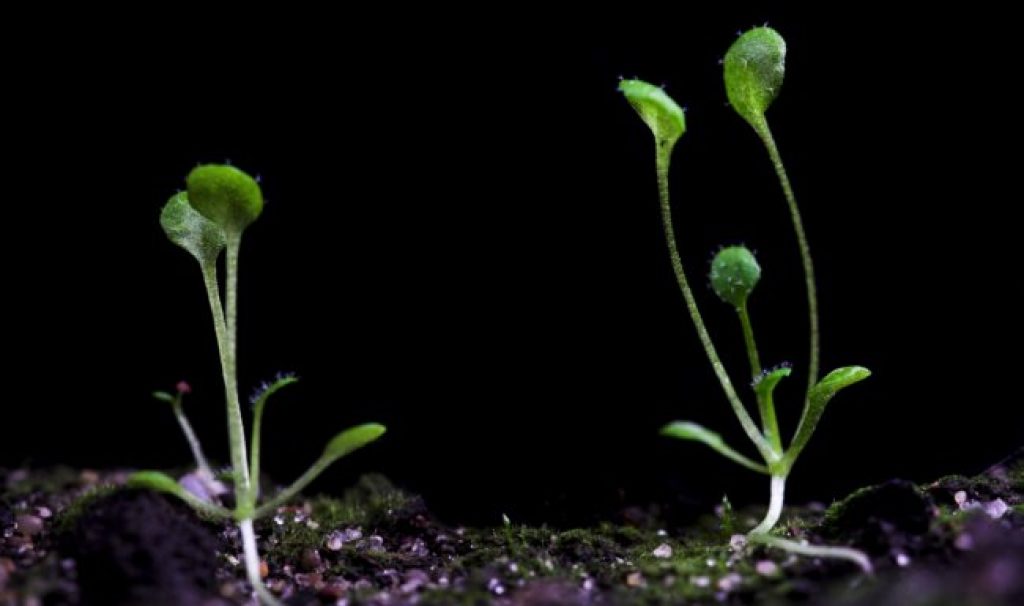
Using Arabidopsis thaliana plants lacking either gene, the researchers showed that mutant plants accumulated much less arsenic in their phloem, the ‘arteries’ of plants, their seed coats and, ultimately, in their seeds. The results demonstrate that inositol transporters are responsible for arsenite loading into phloem, the key step regulating arsenic accumulation in seeds.
This study is the first identification of transporters responsible for arsenic loading into plant ‘arteries’—the phloem. If these findings are proved to be applicable to rice, inositol transporters may be candidates for future developing new cultivars, which accumulate lower amounts of arsenic in their grain without affecting yield production, a major advance toward mitigation of the global health risks posed by arsenic in rice.
The article can be found at: Duan et al. (2015) Inositol Transporters AtINT2 and AtINT4 Regulate Arsenic Accumulation in Arabidopsis Seeds.
———
Source: Chinese Academy of Sciences; Photo: Shutterstock.
Disclaimer: This article does not necessarily reflect the views of AsianScientist or its staff.