AsianScientist (Nov. 20, 2015) – It may be possible to fight cancer by targeting the body’s metabolism of copper, according to research at the Shanghai Institute of Materia Medica (SIMM). The findings, reported in Nature Chemistry, reveal that copper is essential to the development of tumors, in particular oncogenic BRAF signaling and tumorigenesis.
Copper takes part in many vital biological processes, acting as a cofactor for various key metabolism enzymes. Previous studies have found that the concentration of copper is higher in tumor cells than in normal cells.
The only way to regulate intracellular copper levels is to use chelating agents, such as tetrathiomolybdate (TTM). By chelating copper ions, TTM reduces the concentration of cellular copper. It has been used to treat diseases caused by excess copper, such as Wilson’s disease. TTM can also inhibit angiogenesis and shows anti-cancer activities. Unfortunately, most chelating agents, including TTM, show poor selectivity among cations, and exhibit side-effects in clinical use.
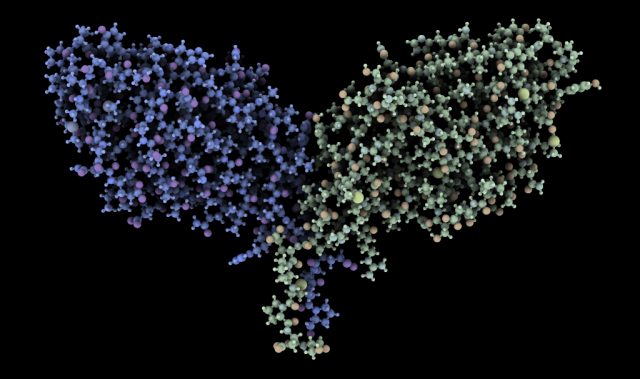
Instead of chelators, the researchers used computational and experimental approaches to identify a series of compounds that could regulate cellular copper signaling by targeting the copper trafficking proteins, Atox1 and hCCS.
Structural based virtual (in silico) screening was firstly used to identify small molecules that target the copper transfer interface of Atox1 and hCCS. Subsequent biochemical experiments validated that several compounds could bind to Atox1 and CCS. Among them, DCAC_50 and DCAC_2 showed the highest binding affinity.
In addition, mutagenesis studies confirmed the binding mode predicted in silico modeling. Cellular assays showed that these compounds exhibit dose-dependent inhibitory activities on the proliferation of cancer cells, through increasing cellular ROS level and inhibiting ATP synthesis. One of these compounds, DCAC_50, also showed prominent anti-tumor activities on animal models without toxicities.
“The challenge in drug design is hitting one of these copper-dependent processes without messing with housekeeping functions that normal cells depend upon,” explained Professor Thomas O’Halloran of Northwestern University, who has studied TTM.
“DCAC_50 appears to block the function of copper metallochaperone proteins without interacting directly with their cargo, copper ions. As the first member of a new class of inhibitors, it provides a new way to interrogate the physiology of copper trafficking disorders and possibly intervene.”
The article can be found at: Wang et al. (2015) Inhibition of Human Copper Trafficking by a Small Molecule Significantly Attenuates Cancer Cell Proliferation.
———
Source: Chinese Academy of Sciences.
Disclaimer: This article does not necessarily reflect the views of AsianScientist or its staff.