AsianScientist (Sep. 29, 2015) – By Rebecca Tan – In 2012, Dr Chang Tse Wen made legal history in Singapore. The Taiwanese scientist, famous for his anti-asthma drug Xolair®, was awarded an unprecedented US$49 million claim against Deutsche Bank by the High Court in Singapore for losses following his investment in a risky financial product known as accumulators.
“Chang’s case was a big deal because banks usually win the lawsuits in Singapore,” explains Low Kee Yang, Associate Professor of Law at the Singapore Management University (SMU) School of Law. “The 2012 ruling was quite startling as it was the first time an investor won such a huge amount against the bank. But in 2013, something even more startling happened: the Court of Appeal overturned the decision.”
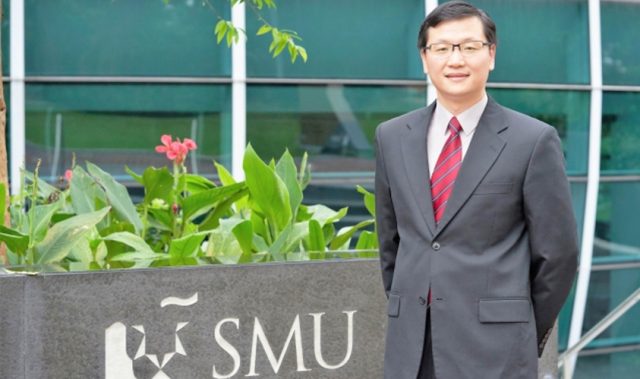
Professor Low Kee Yang’s article, “Deutsche Bank v Chang: A Dramatic Reversal by the Court of Appeal”, published in the Singapore Law Gazette, suggested practical measures that banks could adopt to safeguard themselves from such legal contests. The article was awarded the Best Feature Article at the Singapore Law Gazette Awards 2014.
Cross-border complexities
High-profile cases such as Deutsche Bank AG v Chang Tse Wen are illustrative of the challenges and complexities faced by practitioners of commercial law today; Chang was Taiwanese, suing a German bank for accounts that he had opened in Singapore.
“Which law applies? If you want to sue, where do you sue? If you can get judgement in one place, can you enforce it in another place?” Professor Low Kee Yang asks. “These are just some of the complications that arise when legal issues start to cross national boundaries.”
Professor Low Kee Yang studies these and other legal conundrums as part of the banking, trusts and wealth management cluster under the SMU Centre for Cross-Border Commercial Law in Asia (CEBCLA).
In addition to the banking, trusts and wealth management cluster, CEBCLA has six other clusters, namely corporate and governance law; commercial obligations; intellectual property, competition and information technology; Asian business and rule of law; economic law; and mediation, litigation and arbitration. Given its wide scope, the Centre has to leverage on the School of Law’s collective strength in commercial law.
“Our aspiration is to facilitate research in commercial law in the Asian context,” says CEBCLA director Professor Tang Hang Wu. “We hope to be the first port of call for scholars, practitioners and policy makers working on commercial law in Asia.”
Should non-charitable trusts be allowed?
Just as is the case for wealth management, trusts too have been profoundly impacted by globalisation. An ancient concept first developed in England, trust law governs the relationships between trustees and beneficiaries. While trustees typically hold assets for persons, exceptions can be made for trusts for charitable purposes. In recent times, however, there have been increasing calls to allow non-charitable trusts, particularly in offshore jurisdictions.
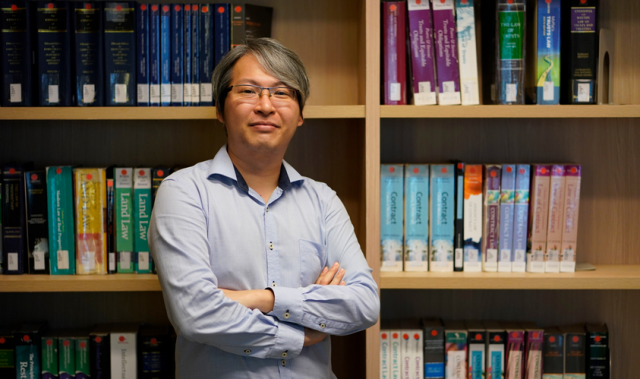
“When Singapore did not endorse the non-charitable purpose trust in our last legislative revision of our trust laws, we were heavily criticised by some practitioners as being outdated,” explains Kelvin Low, Associate Professor of Law at the SMU School of Law and a member of the banking, trusts and wealth management cluster at CEBCLA. “However, the cost benefit analysis of such structures has not been clearly articulated.”
Aiming to address this lack of information, Professor Kelvin Low recently presented a paper at the Modern Studies in the Law of Trusts and Wealth Management: Theory and Practice conference, jointly organised by the CEBCLA, University of York and the Singapore Academy of Law.
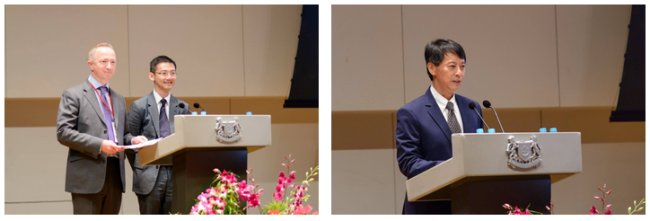
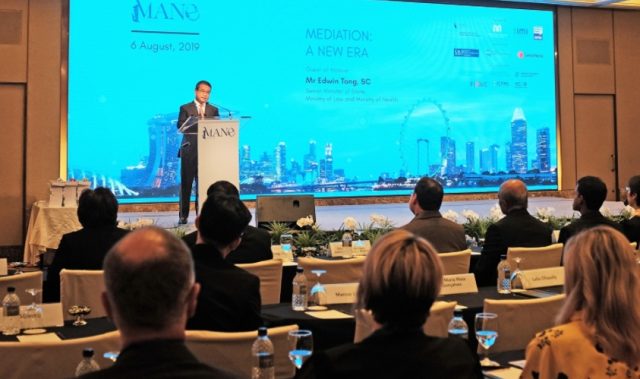
(Right) SMU Associate Professor Low Kee Yang speaking at the Modern Studies in the Law of Trusts and Wealth Management:
Theory and Practice conference organised by CEBCLA.
In that paper, Professor Kelvin Low argued that the benefits of allowing private persons to pursue non-charitable purposes and thereby gaining a larger share of the trusts market were offset by the risk of appearing as a haven for tax evasion.
“Furthermore,” he adds, “there is no indication that a trust is better suited to achieving such an objective than alternative legal devices such as a properly drafted power. In order to ensure that a trust would be more efficacious, one would have to expend a fair amount of public money in order to ‘police’ trustees of such trusts, an expenditure not easily justified to satisfy the idiosyncratic whims and fancies of such settlors.”
Following the success of the inaugural conference, CEBCLA plans to hold it every two years as a continuing series.
“We felt that there wasn’t any international academic conference dealing with trusts and wealth management, and hope that this conference will be a signature event of international significance,” Professor Tang says.
Unifying commercial law
In April this year, the CEBCLA also hosted the United Nations Commission on International Trade Law (UNCITRAL)-Singapore seminar, held to commemorate the 35th anniversary of the United Nations Convention on the Contracts for the International Sale of Goods (CISG).
Ratified by 83 states worldwide, the CISG is a treaty that provides for a uniform law governing international sales contracts. Singapore is the only state party to the CISG in Southeast Asia, having adopted it in 1995.
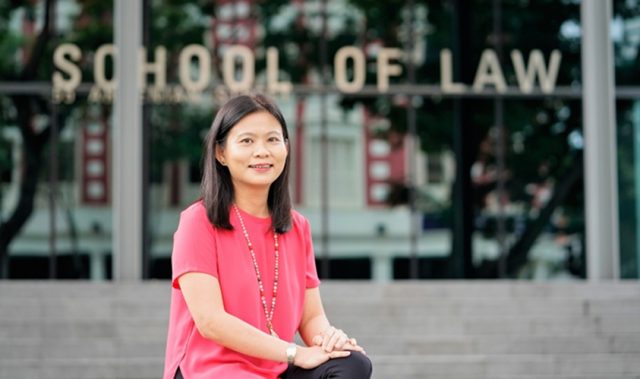
Co-convened by Gary Low, Assistant Professor of Law at the SMU School of Law, the two-day seminar saw leading legal experts such as Mr Renaud Sorieul, UNCITRAL Secretary; Professor Emeritus Takashi Ushida, Ministry of Justice, Japan; and Professor Locknie Hsu, Association of Southeast Asian Nations (ASEAN) Law Association, taking the stage to discuss trends in the use of CISG in Asian legal practice.
“In the context of Singapore, most transactions have a cross-border element, making conferences like these particularly relevant,” Professor Tang notes. “We partnered with the UN [United Nations], the Attorney General’s Office and the Ministry of Law to host this conference with the aim of facilitating Singapore’s development as a major commercial law centre in Asia.”
As the legal landscape becomes more complex, Professor Tang says that research at CEBCLA will help to refine our understanding of Asia’s business environment and ultimately raise the overall standards of the industry.
By bringing the world’s leading legal experts to SMU and tapping on the School of Law’s collective strength in commercial law, CEBCLA will also continue to open up the conversation on cross-border issues in both the theory and practice of law.
Asian Scientist Magazine is a media partner of the Singapore Management University Office of Research.
———
Copyright: SMU Office of Research. Read the original article here; Photo: Shutterstock.
Disclaimer: This article does not necessarily reflect the views of AsianScientist or its staff.