AsianScientist (Mar. 19, 2015) – Australian smart technology that harvests blast furnace waste and converts it into a new product to make cement, is being trialled for commercialisation in China where 60 per cent of the world’s iron waste is produced.
The process, known as dry slag granulation (DSG), also reduces water use and greenhouse gas emissions, and is the focus of an agreement signed by the Commonwealth Scientific and Industrial Research Organization (CSIRO) and the Beijing MCC Equipment Research & Design Corporation (MCCE).
“Our collaboration is an exciting step towards the uptake of an innovation with real prospects of transforming the productivity and environmental performance of global iron smelting,” said Mr. Jonathan Law, CSIRO Director of the Mineral Resources Flagship.
“The benefits from wide uptake of DSG technology on blast furnaces will be profound in helping the global industry to reduce water and energy use and greenhouse gas emissions while sustaining metal production.”
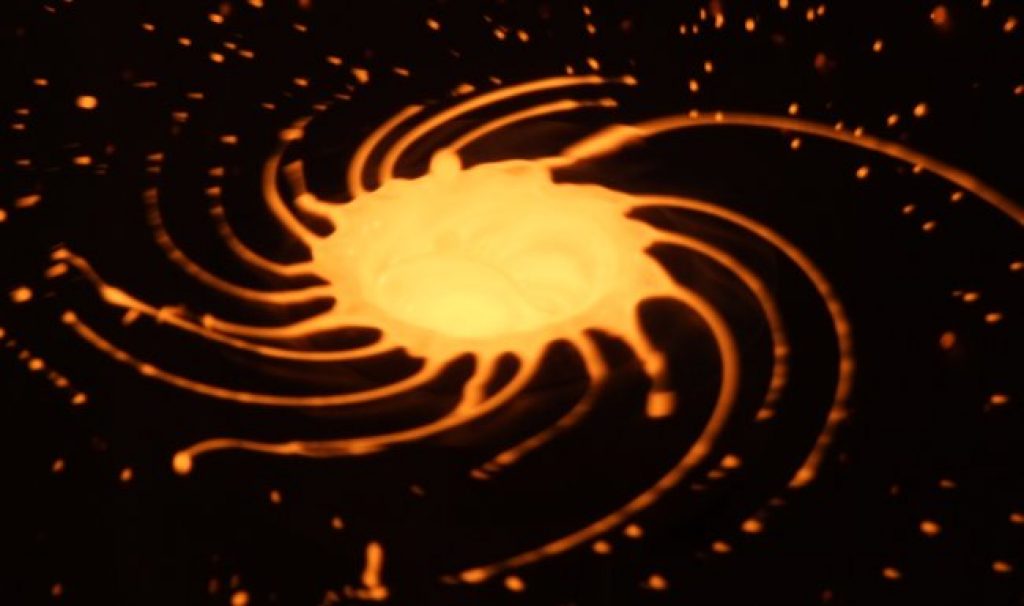
The DSG technology that is fitted to blast furnaces includes a spinning disc and granulation chamber that separates molten slag into droplets under centrifugal forces, uses air to quench and solidify the droplets, and extracts a granulated slag product as well as heated air.
The process produces a ‘glassy’ product that is ideal for cement manufacture, but has significantly lower associated greenhouse gas emissions than cement produced by conventional methods.
Air at 500-600°C extracted from the DSG process can be used onsite for drying, preheating or steam generation. The technology also saves water and eliminates the underground water pollution that can be associated with alternative wet granulation processes.
“The benefits each year from full commercialization and adoption of DSG technology are in the order of 60 billion liters of water, 800 petajoules of heat energy and 60 million tonnes of greenhouse gas emissions,” Law said.
“Those savings are equivalent to 14 percent of Australia’s energy use and about 10 percent of our greenhouse gas emissions each year.”
In entering the collaboration with MCCE, CSIRO has recognized the R&D reputation of the Beijing-based company and its ability to scale-up the technology and introduce it into China, where 60 percent of the world’s 300 million metric tons of iron blast furnace slag is produced each year.
Under the agreement MCCE is to scale-up and demonstrate the technology at industrial scale and, upon success, commercialize it in China and then potentially worldwide. The agreement is the culmination of more than a decade of DSG technology development by CSIRO and industry partners including Arrium and BlueScope.
—–
Source: CSIRO.
Disclaimer: This article does not necessarily reflect the views of AsianScientist or its staff.