AsianScientist (Nov. 26, 2014) – A study of 579 Chinese undergraduates shows that a mutation in the gene encoding for a serotonin receptor is correlated with being single. These results have been published in the journal Scientific Reports.
When it comes to falling in love, sociological and psychological factors such as demographics, external appearance and personality traits are all known to affect a person’s dating opportunities. Led by Professor Zhou Xiaolin from Peking University, scientists asked whether genetic factors could also influence a person’s romantic prospects.
“Love-related behaviors, such as pair bonding and affective affiliation, are found to be associated with the serotonin levels in the brain. In non-human animals, decreasing serotonin levels diminishes female sexual receptivity and induces aggression towards male mates,” Prof. Zhou told Asian Scientist Magazine.
In previous research, Prof. Zhou and his group showed that the C-1019C (CC) genotype of the serotonin receptor 5-HT1A is associated with more secure relationships. Noting that serotonin levels have been documented to influence human relationships, the research group hypothesized that it would be easier for CC carriers to develop and sustain close relationships with others, thereby making them more likely to be in a relationship.
To test their hypothesis, they compared the relationship status of Han Chinese students expressing different versions of the 5-HT1A gene. They found that while 50.4 percent of the individuals carrying the CC genotype were in relationships, only 39 percent of those with the CG or GG polymorphisms were dating at the time of the study.
“49.6 percent of CC carriers and 61.0 percent of CG/GG carriers are single. That is, G allele carriers are 23.0% more likely to be single than others,” said Prof. Zhou.
“The logistic regression analysis suggested that 1.4 percent of the variance in the log odds of being single could be explained by the C-1019G polymorphism after controlling for socioeconomic status, external appearance, religious belief, parenting style and depressive symptoms.”
“While this may seem like a small effect size, in comparison to other single nucleotide polymorphism (SNP) genetic studies which generally have small effect sizes given the abundance of genes, this effect is worth noting.”
Cautioning that the results should not immediately be extrapolated to other populations and that other non-genetic factors might dominate, the researchers have nonetheless demonstrated that genetics can influence complex social interactions.
“These findings provide for the first time direct evidence for the genetic contribution to romantic relationship formation,” he said.
“Further studies can be carried out to investigate whether the effect of the CG polymorphism on romantic relationship formation differs across cultures, religion or age and how 5-HT1A agonists and antagonists modulate love-related behaviors in humans.”
The article can be found at: Liu et al. (2014) The Association Between Romantic Relationship Status and 5-HT1A Gene in Young Adults.
——
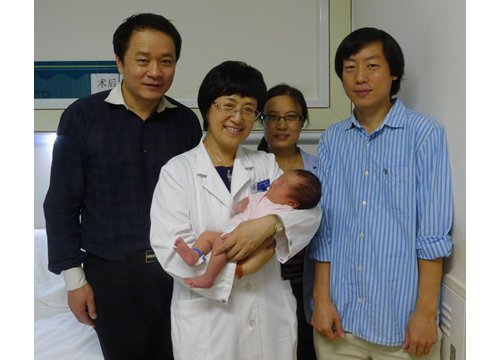
Copyright: Asian Scientist Magazine; Photo: Liu Jinting.
Disclaimer: This article does not necessarily reflect the views of AsianScientist or its staff.