AsianScientist (Nov. 3, 2014) – Fluorescent fruit flies have helped University of Queensland (UQ) researchers take a critical step toward understanding the human brain’s neuronal “wiring” and how it can go awry. The study, co-authored by Dr. Grace Lah and PhD student Joshua Li, appears in the journal Neuron.
Study leader Dr. Sean Millard, from UQ’s School of Biomedical Sciences, said neurobiologists had been baffled by how a small number of genes controlled billions of specific connections in the brain.
“This is a central question in neurobiology that is critical for understanding how brain disorders arise,” Dr. Millard said.
The present study suggests that alternative splicing, a process which allows a single gene to generate multiple protein products, could be vital in understanding how the brain makes so many specific connections using a small toolkit of genes.
“As most human genes undergo alternative splicing, it has long been hypothesized that this is one of the key mechanisms for increasing the repertoire of proteins that generate specific connections between brain cells. However, direct evidence for cell-specific alternative splicing was lacking until this discovery,” Dr. Millard said.
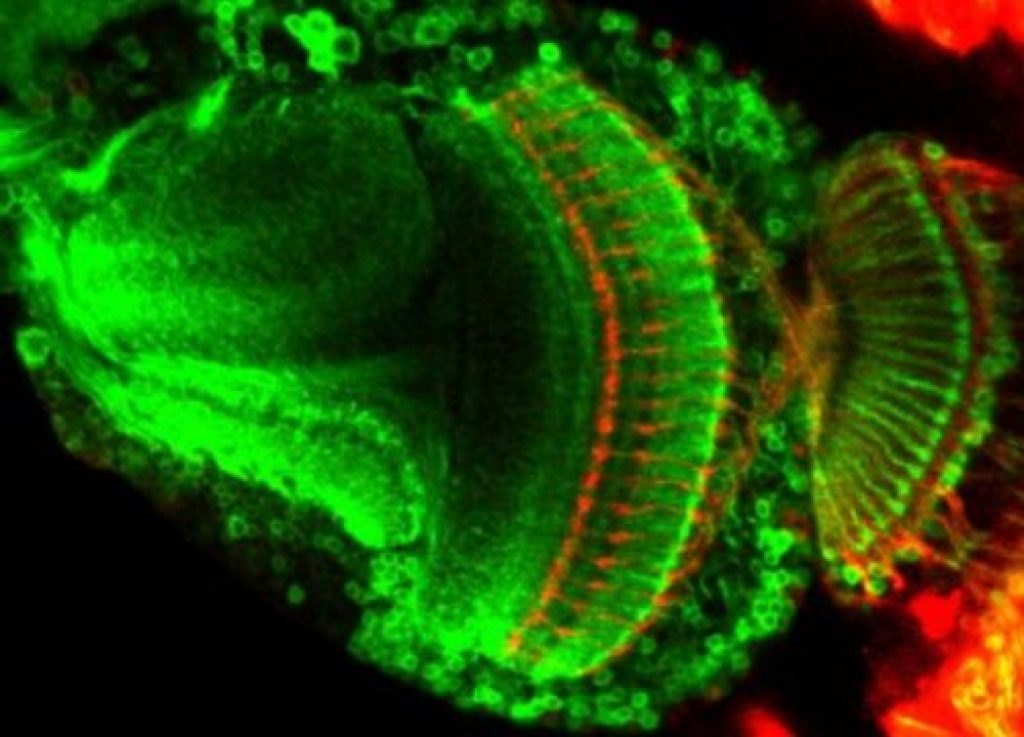
Dscam2 is a protein associated with Down Syndrome that has been implicated in brain disorders. To study the effects of alternatively spliced forms of Dscam2, the researchers generated a strain of flies with fluorescent brain cells that could report which forms of Dscam2 were being expressed. They found that two types of brain cells had to each express the correct form of Dscam2 to connect properly.
“Neuron-specific expression of different Dscam2 proteins was shown to be necessary for proper neuronal wiring. This study shows that a single gene produces different forms of the same protein in different neurons,” Dr. Millard said.
“The study provides the first example of how different types of cells require different versions of the same protein for normal brain wiring. This research implicates alternative splicing as a cellular process that may be perturbed in brain disorders,” he added.
The article can be found at: Lah et al. (2014) Cell-Specific Alternative Splicing of Drosophila Dscam2 Is Crucial for Proper Neuronal Wiring.
——-
Source: University of Queensland.
Disclaimer: This article does not necessarily reflect the views of AsianScientist or its staff.