AsianScientist (Sep. 19, 2014) – Researchers have developed a light detector that could revolutionize chemical sensing and night vision technology.
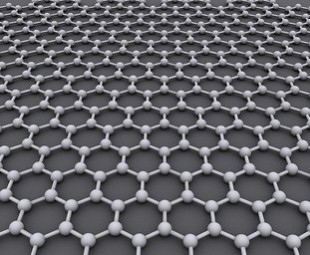
Publishing in Nature Nanotechnology, the team of researchers at Monash University, the University of Maryland in the US and the US Naval Research Laboratory, have created the light detector based on graphene, a single sheet of interconnected carbon atoms.
The detector is capable of detecting light over an unusually broad range of wavelengths, included in this are terahertz waves, between infrared and microwave radiation, where sensitive light detection is most difficult.
Professor Michael Fuhrer, School of Physics at Monash, said the research could lead to a generation of light detectors that could see below the surface of walls and other objects.
“We have demonstrated light detection from terahertz to near-infrared frequencies, a range about 100 times larger than the visible spectrum,” Prof. Fuhrer said. “Detection of infrared and terahertz light has numerous uses, from chemical analysis to night vision goggles, and body scanners used in airport security.”
Current technological applications for terahertz detection are limited, as they need to be kept extremely cold to maintain sensitivity. Existing detectors that work at room temperature are bulky, slow, and expensive.
Prof. Fuhrer said the new detector worked at room temperature, and was already as sensitive as any existing room-temperature detector technology in the terahertz range, but was also more than a million times faster.
“The combination of sensitivity and speed for terahertz detection is simply unprecedented,” he said.
The researchers said because the device was easily manufactured it could lead to inexpensive infrared cameras or night-vision goggles.
The article can be found at: Cai et al. (2014) Sensitive Room-Temperature Terahertz Detection via the Photothermoelectric Effect in Graphene.
——–
Source: Monash University.
Disclaimer: This article does not necessarily reflect the views of AsianScientist or its staff.