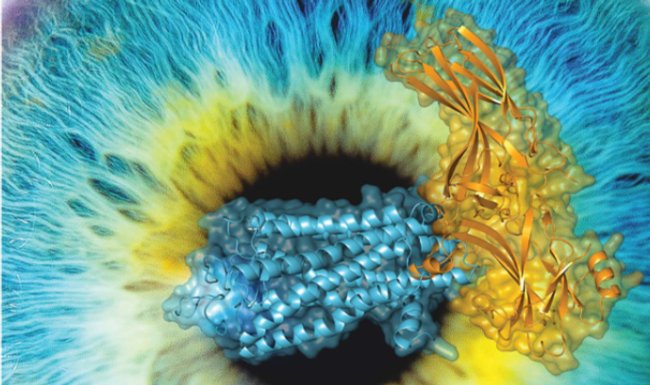
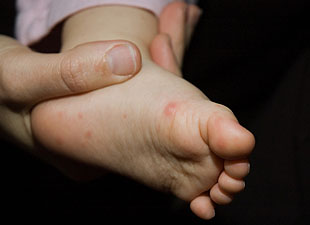
AsianScientist (Jul 22, 2014) – A study shows that pH-dependent changes of the receptor SCARB2 are crucial for enterovirus 71 (EV71) attachment, entry and uncoating; valuable information that could be used to design drugs against the virus which causes hand, foot and mouth disease (HFMD).
EV71 is the major causative agent of HFMD in the Asia-Pacific region, having caused 8.8 million infections and 3,000 deaths in China alone over the past five years. Unlike other enteroviruses (e.g. Coxsackievirus), EV71 can cause severe aseptic meningitis, encephalitis, myocarditis and acute flaccid paralysis, thus leading to significant fatality rates.
Unfortunately, the molecular mechanism of EV71 invasion remains poorly understood and there are still no clinically approved therapeutics. Researchers from the Institute of Biophysics, Chinese Academy of Sciences, reported in a study published in Protein & Cell a novel mechanism for EV71 entry mediated by its receptor SCARB2. These findings make a significant conceptual advance in the understanding of non-enveloped virus entry, to which EV71 belongs.
In this study, the authors determined the crystal structures of the SCARB2 ectodomain at physiological pH (7.5) and acidic pH (4.8). Comparison of these structures revealed an unexpected pH-dependent conformational change in the EV71 binding sites. At acidic condition, SCARB2 opens up a lipid-transfer tunnel to trigger viral uncoating, releasing the viral genome into the host cell.
In addition, the authors demonstrated that the glycosylation of SCARB2 plays a crucial role in attachment and infection of EV71. These results demonstrate how SCARB2 mediates both attachment and uncoating of EV71, and provide valuable information for SCARB2-related drug design against EV71 infection.
The article can be found at: Dang et al. (2014) Molecular Mechanism of SCARB2-mediated Attachment and Uncoating of EV71.
——–
Source: Springer; Photo: AJ Cann/Flickr/CC.
Disclaimer: This article does not necessarily reflect the views of AsianScientist or its staff.