AsianScientist (Jun 24, 2014) – Korean research team revealed conflicting climate change patterns between the middle latitude areas of the Northern and Southern Hemispheres in relation to glacial and interglacial cycles which have puzzled scientists for the past 60 years.
Dr. Jo Kyoung-nam from the Quaternary Geology Department of the Korea Institute of Geoscience and Mineral Resources (KIGAM) revealed a clue for solving the riddle of past global climate change in his paper published in the Nature.
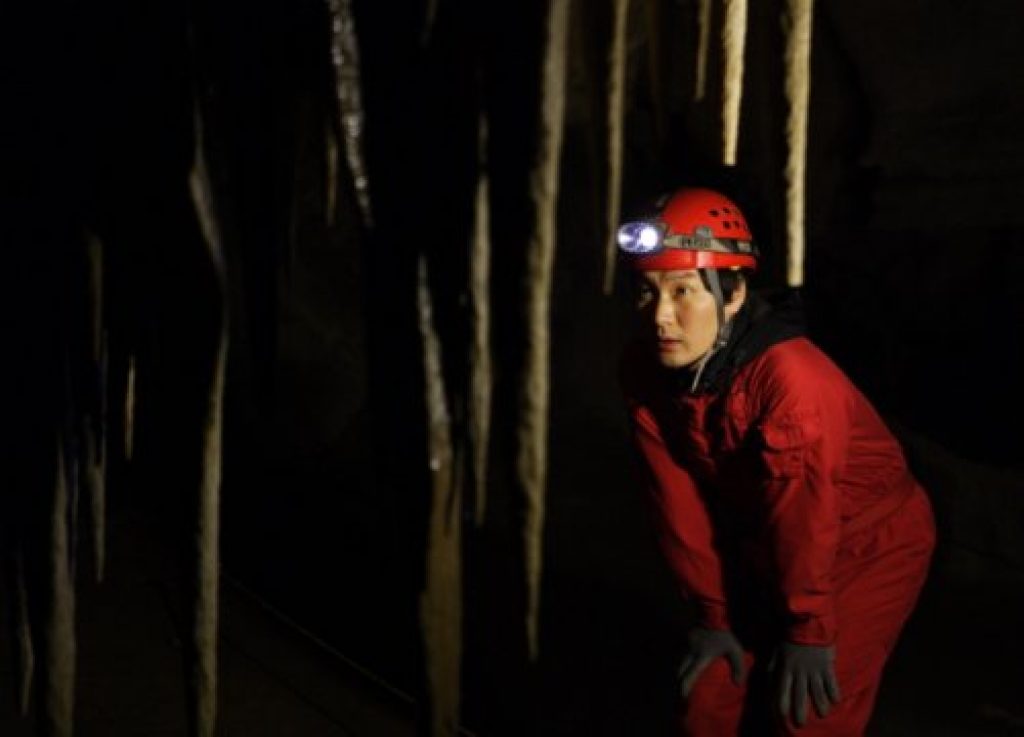
Stalagmites and flowstones in limestone caves act as ‘hard disks’ containing the past climate change data. Through isotope analysis and age dating, Dr. Jo and his team revealed how much they grew in which eras, tracing the past climate changes over 550,000 years.
For this study, Dr. Jo explored over 200 caves in Korea and collected 24 samples from stalagmites and flowstones in 15 limestone caves. It was found that they grew well during interglacial eras when it was warm and moist, whereas their growth stagnated during glacial eras. By comparing this data with existing external climate change data which were obtained from solar insolation, glaciers, and deep sea sediments, he found that the same climate change phenomena appeared in the same periods.
In particular, the analysis revealed that climate changes in the Northern and Southern Hemispheres showed opposite tendencies. This supports the extension of the interhemispheric hydrological seesaw theory to temperate areas. The hydrological seesaw theory states that frequent rain in the intertropical convergence zone (ITCZ) accelerates the growth of plants and increases the temperature, whereas other areas exhibit cold dry weather. If it extended to the temperate regions, the seesaw phenomenon could explain global climate changes such as glacial and interglacial cycles.
This study has attracted keen interest from academic circles because the results can be used to explain past climate change and predict future climate change. It could also contribute to a more accurate model of global climate change by describing the different regional climate change mechanisms.
Dr. Jo said, “Geology research such as ancient climate research is usually regarded as something that is distant from our daily lives, but it is the only way to understand the effects of large-scale climate changes that actually happened in the past.”
“In order to more accurately assess serious climate change events and the impacts that human beings will experience, it is essential to continuously discuss with domestic scholars as well as to participate in large-scale international joint research programs such as the International Ocean Discovery Program.”
The article can be found at: Jo et al. (2014) Mid-Latitude Interhemispheric Hydrologic Seesaw Over The Past 550,000 Years.
—-
Source: Korea Institute of Geoscience and Mineral Resources.
Disclaimer: This article does not necessarily reflect the views of AsianScientist or its staff.