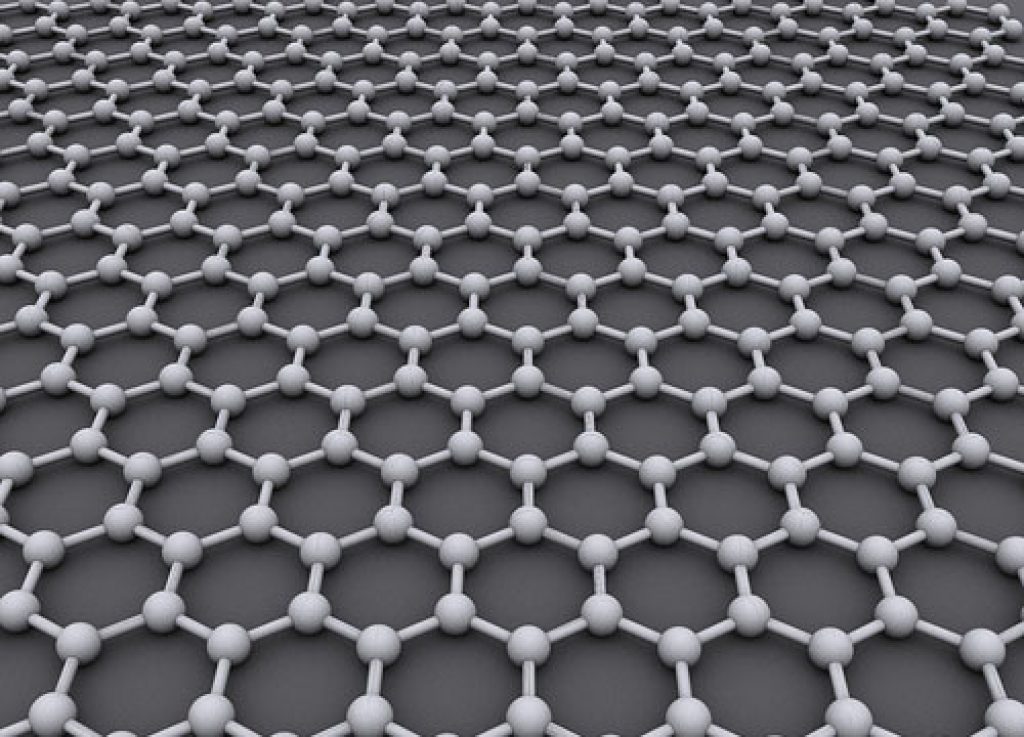
AsianScientist (Apr. 21, 2014) – Samsung Electronics has discovered a new synthesis method to speed the commercialization of graphene, a unique material ideally suited for electronic devices.
The method, which has been published in the journal Science, was developed jointly by Samsung Advanced Institute of Technology (SAIT) and Sungkyunkwan University in South Korea.
“This is one of the most significant breakthroughs in graphene research in history,” said a spokesperson from the SAIT lab. “We expect this discovery to accelerate the commercialization of graphene, which could unlock the next era of consumer electronic technology.”
Graphene has 100 times greater electron mobility than silicon, the most widely used material in semiconductors today. It is more durable than steel and has high heat conductibility as well as flexibility, which makes it the perfect material for use in flexible displays, wearables and other next generation electronic devices.
Engineers around the world have invested heavily in research for the commercialization of graphene, but have faced many obstacles. Multi-crystal synthesis, the process of synthesizing small graphene particles to produce large-area graphene, deteriorated the electric and mechanical properties of the material, limiting its application range and making it difficult to commercialize.
The new method synthesizes large-area graphene into a single crystal on a semiconductor, maintaining its electric and mechanical properties. The new method can be used to repeatedly synthesize single crystal graphene on the current semiconductor wafer scale.
The article can be found at: Lee et al. (2014) Wafer-Scale Growth of Single-Crystal Monolayer Graphene on Reusable Hydrogen-Terminated Germanium.
———
Source: Samsung Tomorrow; Photo: UCL Mathematical and Physical Sciences/Flickr/CC.
Disclaimer: This article does not necessarily reflect the views of AsianScientist or its staff.