Asian Scientist (Oct. 14, 2013) – Researchers in Australia have developed a new graphene-based material that may revolutionize secure optical information storage.
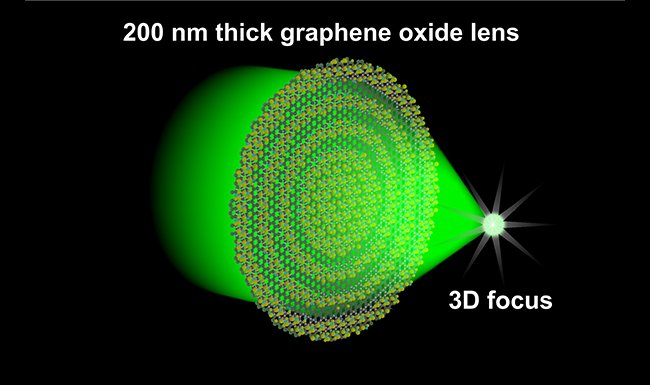
In a paper published in Scientific Reports, the researchers demonstrated how information can be stored as a holographic coding in a graphene oxide polymer composite.
“Conventionally, information is recorded as binary data in a disc. If the disc is broken, the information cannot be retrieved,” Director of the Center for Micro-Photonics at Swinburne University of Technology, Professor Min Gu, said.
“This is a major operation cost in big data centers, which consist of thousands of disc arrays with multiple physical duplicates of data. The new material allows the development of super-discs, which will enable information to be retrieved – even from broken pieces.”
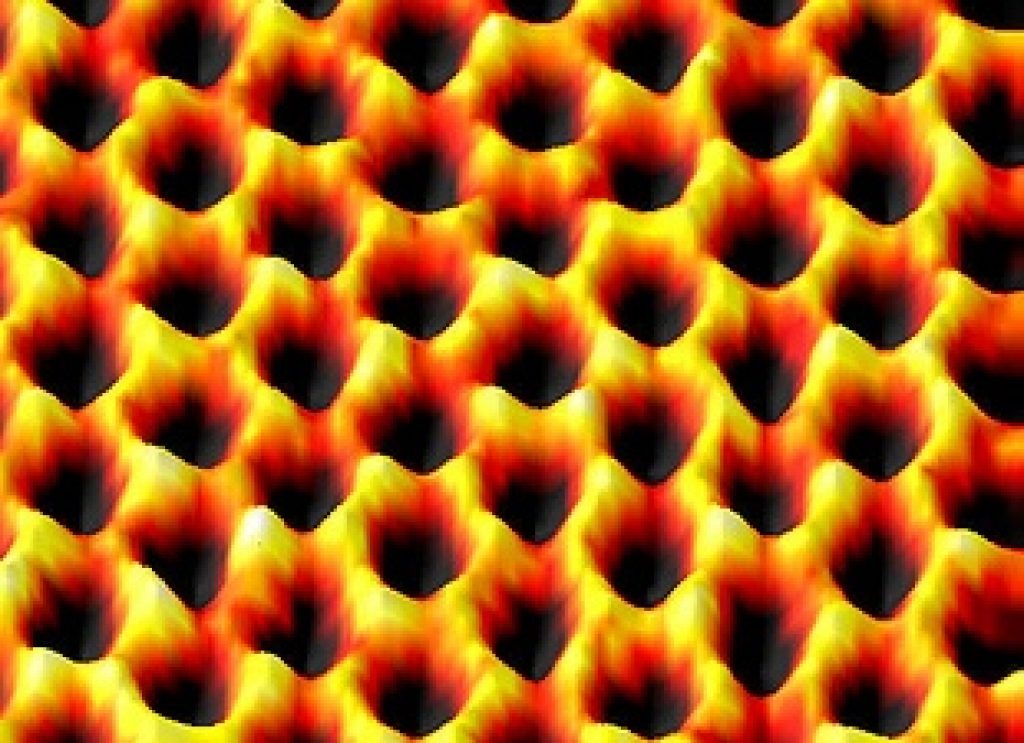
Graphene oxide is similar to graphene, which is very strong, light, flexible, nearly transparent, and an excellent conductor of heat and electricity. Graphene oxide has similar properties, but also has a fundamental fluorescent property that can be used in bioimaging and for multimode optical recording.
By focusing an ultrashort laser beam onto the graphene oxide polymer, the researchers created a 10-100 times increase in the refractive index (a measure of how much it bends light) of the graphene oxide along with a decrease in its fluorescence.
“The unique feature of the giant refractive-index modulation together with the fluorescent property of the graphene oxide polymer offers a new mechanism for multimode optical recording,” Gu said.
To demonstrate the feasibility of the mechanism, the researchers encoded the image of a kangaroo in a computer generated hologram. The hologram was then rendered as a three-dimensional recording to the graphene oxide polymer. The encrypted patterns in the hologram could not be seen as a normal microscope image, but could be retrieved in the diffracted mode.
“The giant refractive index of this material shows promise for merging data storage with holography for security coding,” Gu said.
“This exciting feature not only boosts the level of storage security, but also helps to reduce the operation costs of big data centers that rely on multiple physical duplicates to avoid data loss.”
According to the researchers, the new material may also revolutionize flat screen TV and solar cell technology.
——
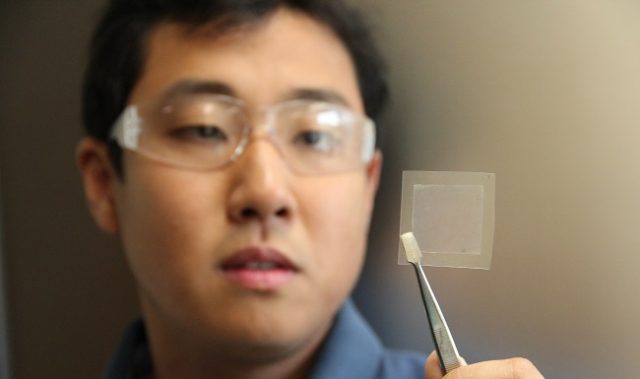
Source: Swinburne University of Technology; Photo: U.S. Army Materiel Command/Flickr/CC.
Disclaimer: This article does not necessarily reflect the views of AsianScientist or its staff.