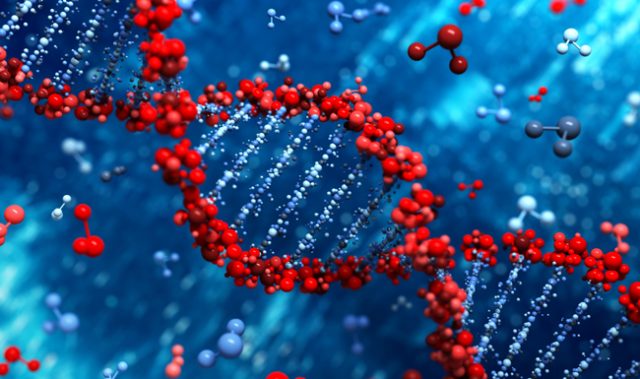
Asian Scientist (Aug. 5, 2013) – Australian researchers have confirmed that, far from being “junk”, the 97 per cent of human DNA that does not encode instructions for making proteins can play a significant role in controlling cell development.
In doing so, the researchers revealed a previously unknown mechanism for regulating the activity of genes, increasing our understanding of the way cells develop and opening the way to new possibilities for therapy.
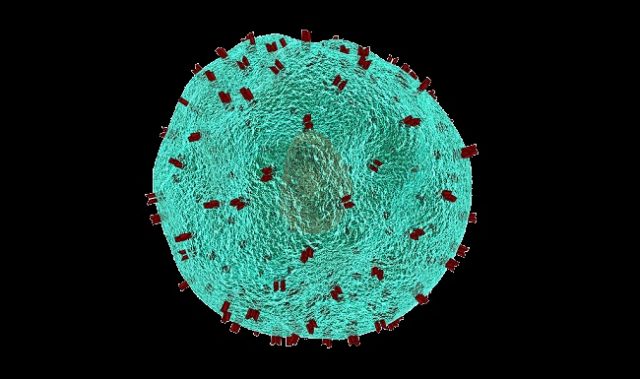
In their study, published in Cell, the researchers showed how particular white blood cells use non-coding DNA to regulate the activity of a group of genes that determines their shape and function.
“This discovery, involving what was previously referred to as junk, opens up a new level of gene expression control that could also play a role in the development of many other tissue types,” said Professor John Rasko who led the study.
“Our observations were quite surprising and they open entirely new avenues for potential treatments in diverse diseases including cancers and leukaemias.”
The researchers reached their conclusions through studying introns — non-coding sequences which are located inside genes.
As part of the normal process of generating proteins from DNA, the code for constructing a particular protein is printed off as a strip of genetic material known as messenger RNA (mRNA). It is this strip of mRNA which carries the instructions for making the protein from the gene in the nucleus to the protein factories or ribosomes in the body of the cell.
But these mRNA strips need to be processed before they can be used as protein blueprints. Typically, any non-coding introns must be cut out to produce the final sequence for a functional protein.
Many of the introns also include a short sequence – known as the stop codon – which, if left in, stops protein construction altogether. Retention of the intron can also stimulate a cellular mechanism which breaks up the mRNA containing it.
The researchers developed a computer program to sort out mRNA strips retaining introns from those which did not. By doing this, the researchers found that mRNA strips from many dozens of genes involved in white blood cell function were prone to intron retention and consequent breakdown. This was related to the levels of the enzymes needed to chop out the intron. Unless the intron is removed, functional protein products are never produced from these genes.
Based on their findings, the researchers propose intron retention as an efficient means of controlling the activity of many genes.
“In fact, it takes less energy to break up strips of mRNA, than to control gene activity in other ways,” said Rasko. “This may well be a previously-overlooked general mechanism for gene regulation with implications for disease causation and possible therapies in the future.”
The article can be found at: Wong et al. (2013) Orchestrated Intron Retention Regulates Normal Granulocyte Differentiation.
——
Source: Centenary Institute.
Disclaimer: This article does not necessarily reflect the views of AsianScientist or its staff.