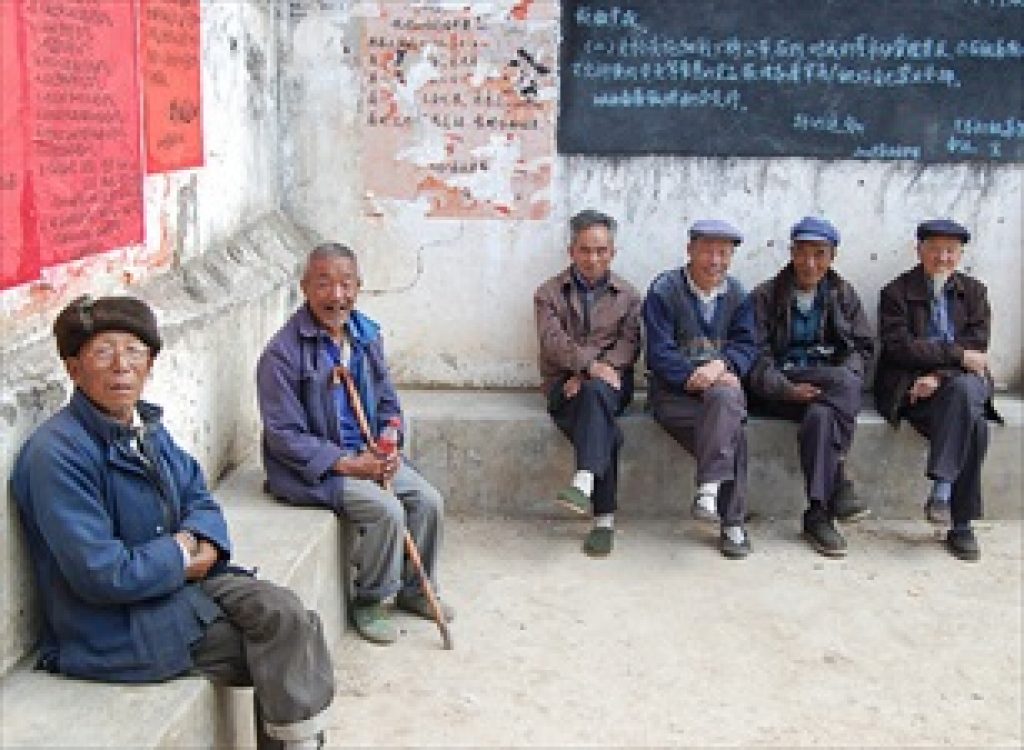
Asian Scientist (Aug. 1, 2013) – An international team of researchers has found that over 90 percent of dementia cases in China go undetected, with a high level of undiagnosed dementia in rural areas.
The team of public health experts in the UK and China argue that more mental health education targeting high-risk populations is needed to improve diagnosis rates, and increase support for sufferers and their families.
Dementia affects 10 million in China and up to 50 million worldwide, of which an estimated 35 million sufferers are undiagnosed.
The new study, published in the British Journal of Psychiatry, found that in China 93 percent of dementia cases in people aged 60 and over went undetected.
This level of undetected dementia is much higher than has been seen in studies undertaken in high income countries, where about 60 percent of older adults with dementia are not diagnosed.
In their study, the researchers interviewed a random sample of 7,072 older adults in six provinces across China, with one rural and one urban community in each province.
Through the interviews, they identified 359 older adults with dementia and 328 with depression. There were only 26 participants who had doctor-diagnosed dementia reported and 26 who had doctor-diagnosed depression.
Overall, 93 percent of dementia cases and 93 percent of depression were not detected.
Furthermore, the team found that undetected dementia among older adults is strongly associated with low socioeconomic status such as a low educational and occupational class, and living in a rural area.
In rural China, the average annual income is two to five times lower than in urban areas and about 90 percent of older people are illiterate. Medical coverage and health services are often insufficient in rural areas, with primary care clinics mainly staffed by health-workers with limited training.
Previous studies have not shown a strong association between low socioeconomic status and undetected dementia in high-income countries, which could be due to better access to healthcare.
The research team also think that Chinese cultural factors may play a role in poor detection rates of dementia. Unlike in high-income countries, most of older Chinese people live with their families.
A surprising, important finding was that undetected dementia is related to strong social support. Such ‘help available when needed’ may mask the disease and hinder detection.
Chinese may also interpret dementia symptoms in older people as being an acceptable part of the ageing process rather than as an illness.
“China has the most dementia sufferers of any country in the world, but at the same time it is a poorly recognized condition,” said Dr Ruoling Chen, the lead author of the study.
“Mental health services need to be prioritized as economic development extends throughout China.”
According to the researchers, mental health campaigns should also be carried out to ensure that health workers and the general population are able to recognize the condition, so that sufferers receive the support they need.
Large treatment gaps for mental and neurological disorders have previously been observed in low income countries, but this is the first study to focus on older adults, among whom dementia is a major concern.
The article can be found at: Chen et al. (2013) Determinants For Undetected Dementia And Late-Life Depression.
——
Source: UCL; Photo: Matt Spurr/Flickr.
Disclaimer: This article does not necessarily reflect the views of AsianScientist or its staff.