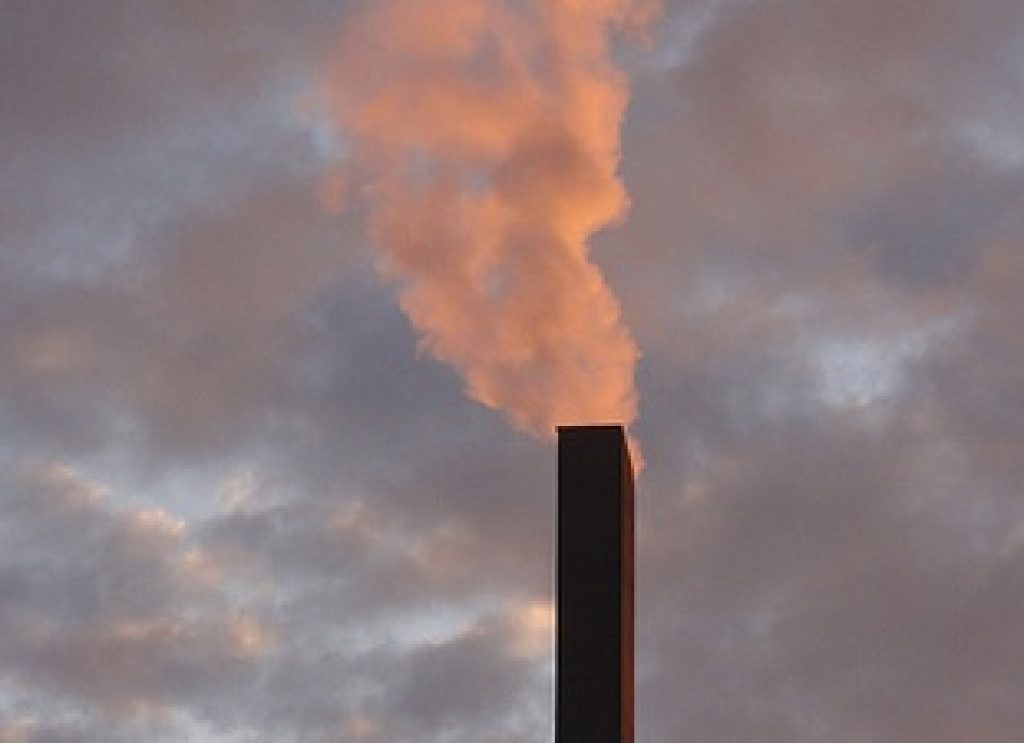
Asian Scientist (Jul. 11, 2013) – Australian researchers have developed a new nanomaterial that could help reduce carbon dioxide emissions from coal-fired power stations.
The new nanomaterial, described in the Journal of the American Chemical Society, efficiently separates the greenhouse gas carbon dioxide from nitrogen, the other significant component of the waste gas released by coal-fired power stations. This allows the carbon dioxide to be separated and stored, rather than being released to the atmosphere.
“A considerable amount of Australia’s – and the world’s – carbon dioxide emissions come from coal-fired power stations,” said Associate Professor Christopher Sumby, leader of the project.
“Removing CO2 from the flue gas mixture is the focus of a lot of research. Most of Australia’s energy generation still comes from coal. Changing to cleaner energies is not that straightforward but, if we can clean up the emissions, we’ve got a great stop-gap technology.”
According to the researchers, the new absorbent material they produced, termed a metal-organic framework, has remarkable selectivity for separating CO2 from nitrogen.
“It is like a sponge but at a nanoscale,” said Sumby.
“The material has small pores that gas molecules can fit into – a CO2 molecule fits but a nitrogen molecule is slightly too big. That’s how we separate them.”
Other methods of separating CO2 from nitrogen are energy-intensive and expensive. This material is potentially more energy efficient and it is easy to regenerate for reuse.
The researchers are now working on dispersing the powder form of the material in a membrane as that may make it more practical for industrial use.
The article can be found at: Bloch et al. (2013) Post-Synthetic Structural Processing In A Metal–Organic Framework Material As A Mechanism For Exceptional CO2/N2 Selectivity.
——
Source: University of Adelaide; Photo: twicepix/Flickr.
Disclaimer: This article does not necessarily reflect the views of AsianScientist or its staff.