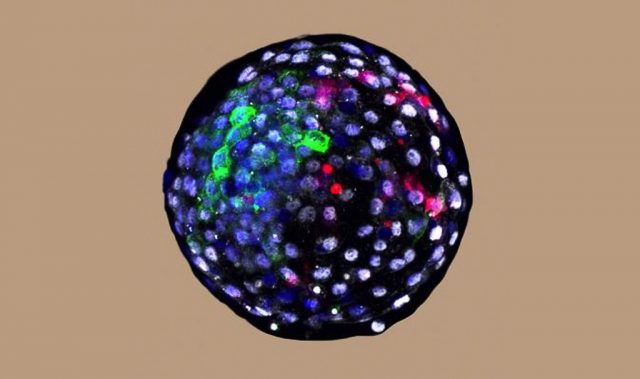
AsianScientist (Jul. 25, 2013) – Chinese researchers have used a cocktail of small molecules to reprogram somatic cells to a pluripotent state with the ability to differentiate into any cell type in the body.
In this study, a team of researchers led by Professors Yang Zhao and Hongkui Deng from Peking University in Beijing, China screened 10,000 small molecules to find chemical substitutes for known reprogramming factors. Previously, the addition of exogenous “master genes” via nuclear transfer or ectopic expression was required to induce this pluripotent state.
“Small molecules have advantages because they can be cell permeable, non-immunogenic, more cost-effective, and can be more easily synthesized, preserved, and standardized,” the researchers write. “Moreover, their effects on inhibiting and activating the function of specific proteins are often reversible and can be finely tuned by varying the concentrations.”
The researchers showed that the chemically induced pluripotent stem cells (CiPSCs) could be generated from mouse somatic cells at a frequency up to 0.2 percent using the small molecule cocktail, rates that are comparable to induced pluripotent stem cell (iPSC) production. The CiPSCs resembled embryonic stem cells (ESCs) in terms of their gene expression profiles, epigenetic status, and potential for differentiation and germline transmission.
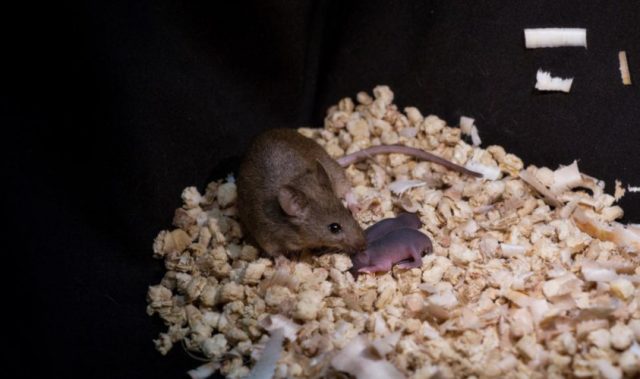
They then injected the CiPSCs into immunodeficient mice and found that the cells were able to differentiate into tissues of all three germ layer. Using their technology, they cloned several healthy laboratory mice, including one called QingQing, Deng told the state-run Xinhua news agency. According to the authors, the mice generated from CiPSCs were “100 percent viable and apparently healthy for up to 6 months.”
“QingQing has been living for more than 100 days up to now. It develops well and it’s lively and healthy. What’s more, QingQing has already got its own ‘babies’ and they no longer need to worry about their health,” Deng told Xinhua.
The implications of this study are plenty. Increasing the ease of reprogramming could spur the development of therapeutic cloning, where researchers generate tissues and organs for clinical applications. The new system also makes genetic manipulation dispensable in cell fate reprogramming, reducing the danger of cancers arising from the introduction of proto-oncogenes.
The article can be found at: Hou P et al. (2013) Pluripotent Stem Cells Induced from Mouse Somatic Cells by Small-Molecule Compounds.
——
Copyright: Asian Scientist Magazine; Photo: Sanofi Pasteur/Flickr/CC.
Disclaimer: This article does not necessarily reflect the views of AsianScientist or its staff.