


AsianScientist (May 9, 2013) – A collaboration between Taiwan and Mexico aims to build a new observatory in California that will study the Solar System beyond Neptune.
On Thursday last week, the Academia Sinica Institute of Astronomy and Astrophysics (ASIAA), along with the National Autonomous University of Mexico’s Institute of Astronomy and the Smithsonian Astrophysical Observatory, held a groundbreaking ceremony to mark the start of construction of the Transneptunian Automated Occulatation Survey (TAOS-2) project at the Mexican National Astronomical Observatory in northwest Baja, California.
The project marks the first large scientific collaboration between Taiwan and Mexico. The telescopes will be installed this year and in 2014, and the cameras will be developed and delivered in 2015. TAOS-2 is scheduled to start the regular operation in 2016.
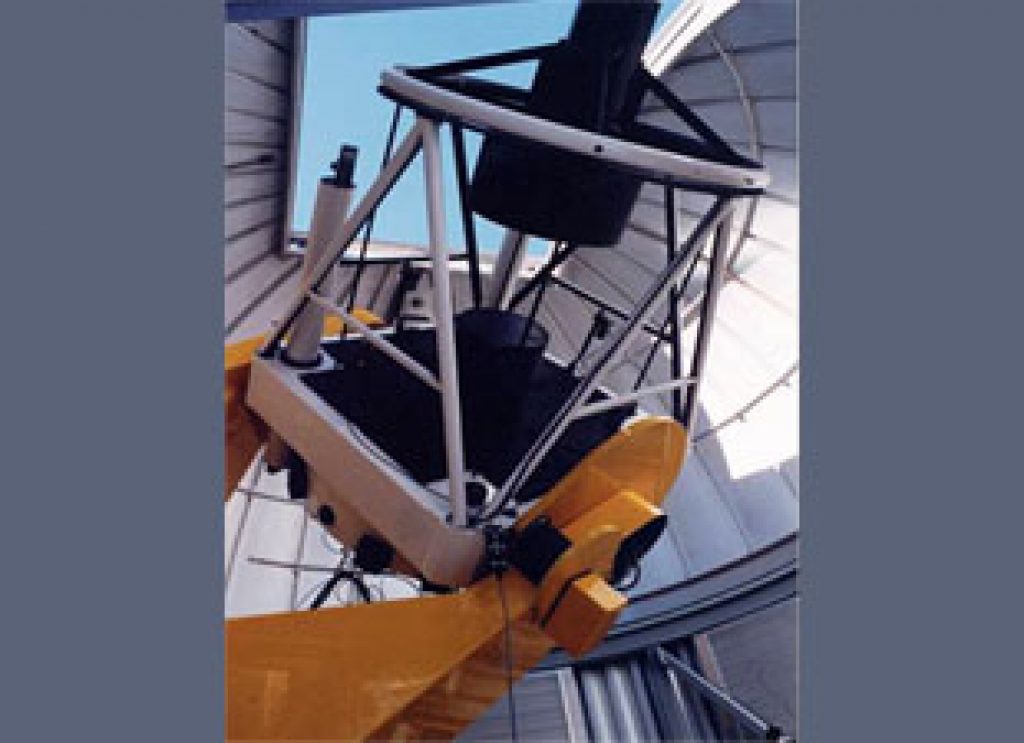
Led by ASIAA, the project aims to install three 1.3-meter robotic telescopes with the latest high speed cameras to carry out a census of stellar occultations (events that occur when one object is hidden by another object that passes between it and the observer) by small bodies on the periphery of the solar system. TAOS-2 is the second phase of the TAOS project.
The first phase of the project (TAOS), which constructed four 50-cm robotic telescopes at the Lulin observatory in central Taiwan, generated important results regarding the number of small bodies in the outer solar system. With larger telescopes, fast cameras, and a better site in Mexico, TAOS-2 is expected to be 100 times more sensitive than TAOS, allowing the delivery of better number densities for different sizes of these small bodies.
TAOS-2 will double the number of telescopes at San Pedro Martir, and provide opportunities for scientific and technological cooperation between researchers, engineers, and students in Taiwan and Mexico. The Mexican National Astronomical Observatory currently has three telescopes which were installed between 1971 and 1979 and provides services to astronomers around the world who can make high quality astronomical observations at the site.
——
Source: Academia Sinica.
Disclaimer: This article does not necessarily reflect the views of AsianScientist or its staff.





