



AsianScientist (Jul. 13, 2011) – An analysis of heart disease and stroke statistics collected in 192 countries by the World Health Organization (WHO) shows that the relative burden of the two diseases varies widely from country to country and is closely linked to national income.
Reporting this week in the journal Circulation, Dr. Anthony S. Kim and Dr. S. Claiborne Johnston of the University of California, San Francisco (UCSF) found that developing countries tend to suffer more death and disability by stroke than heart disease – opposite from the situation in the United States and other countries with higher national incomes.
The study found stroke ranged from a worldwide low of 25 deaths per 100,000 in Seychelles to a high of 249 deaths per 100,000 in Kyrgyzstan. In the United States, there are 45 deaths per 100,000 people due to stroke.
Heart disease and stroke are two diseases separated by a common pathology. Both are caused by reduced or restricted blood flow to vital organs, and the two diseases share many of the same common risk factors, such as hypertension, diabetes, high cholesterol, obesity, physical inactivity, and smoking.
But because they affect very different tissues – the heart and the brain – the two diseases diverge in terms of symptoms, approaches to critical care, follow-up treatment, and the duration and cost of recovery. Awareness of these differences was what motivated the study.
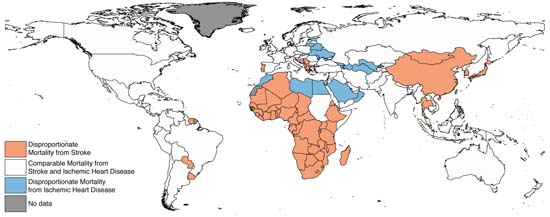
In the United States, for instance, heart disease is the number one killer and stroke the number four, according to the Centers for Disease Control and Prevention. According to the WHO data, the same is true throughout the Middle East, most of North America, Australia, and much of Western Europe.
In many developing countries, the opposite is true. Stroke burden was disproportionately higher in China, Africa, and South America. In all, nearly 40 percent of all nations have a greater burden of stroke compared to heart disease.
This observation may help health officials design interventions that best fit the needs of developing countries, said Dr. Kim.
“Knowing that the burden of stroke is higher in some countries focuses attention on developing a better understanding of the reasons for this pattern of disease and may help public health officials to prioritize resources appropriately,” he said.
The article can be found at: Kim AS et al. (2011) Global Variation in the Relative Burden of Stroke and Ischemic Heart Disease.
——
Source: UCSF.
Disclaimer: This article does not necessarily reflect the views of AsianScientist or its staff.





