AsianScientist (Jun. 27, 2011) – Formaldehyde is a major contaminant of indoor air that originates from particle boards, carpets, window coverings, paper products, tobacco smoke, and other sources.
Indoor volatile organic compounds (VOCs) such as formaldehyde are known to contribute to allergies, asthma, headaches, and a condition known as ‘sick building syndrome.’
In 2002, the World Health Organization estimated that undesirable indoor volatiles represent a widespread, serious health problem that causes more than 1.6 million deaths per year and 2.7 percent of the global burden of disease.
Scientists have long known the benefits of using plants to absorb and metabolize gaseous formaldehyde. Phytoremediation, the use of green plants to remove contaminants or render them harmless, is a potentially viable and environmentally significant means for improving indoor air quality.
A team of scientists from the Korean Rural Development Administration and the Department of Horticulture at the University of Georgia tested the efficiency of volatile formaldehyde removal using 86 species of plants that represent five general classes: ferns, woody foliage plants, herbaceous foliage plants, Korean native plants, and herbs.
To assess phytoremediation potential, the plants were exposed to gaseous formaldehyde in airtight chambers made of inert materials, and the rate of removal was measured.
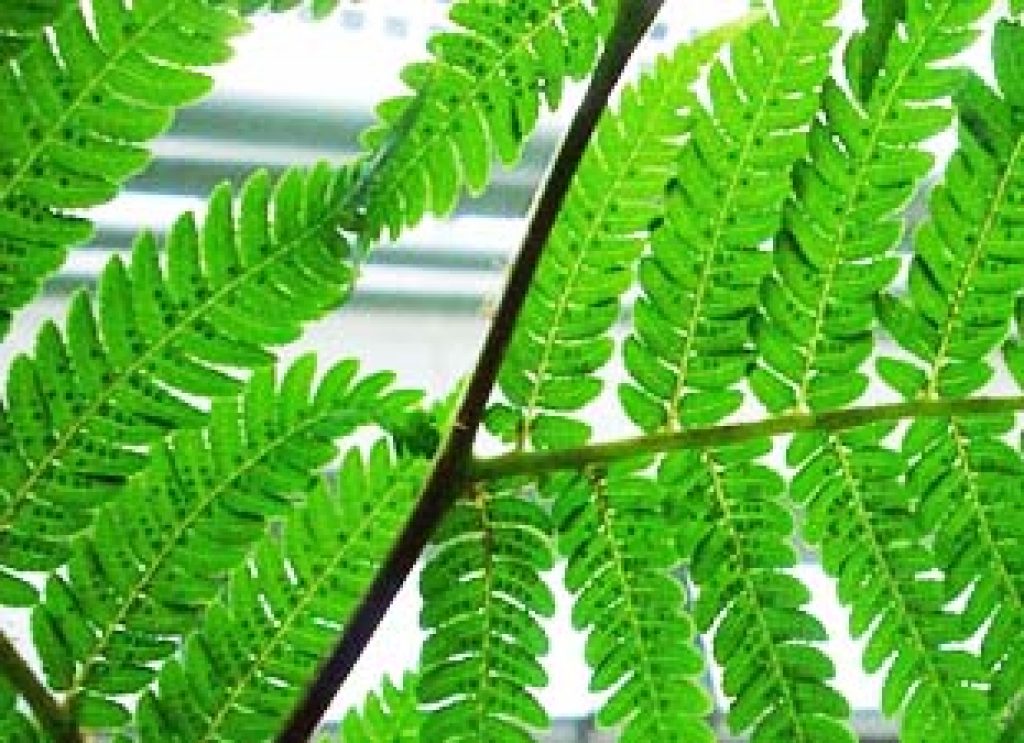
Of the five classes of plants tested, ferns had the highest formaldehyde removal efficiency, with Osmunda japonica (Japanese royal fern) determined to be the most effective of all 86 species, and 50 times more effective than the least (D. deremensis) efficient species.
The results were published in the journal HortScience. The most effective species tested were: Osmunda japonica (Japanese royal fern), Selaginella tamariscina (Spikemoss), Davallia mariesii (Hare’s-foot fern), Polypodium formosanum, Psidium guajava (Guava), Lavandula (Sweet Lavender), Pteris dispar, Pteris multifida (Spider fern), and Pelargonium (Geranium).
According to the corresponding author Kwang Jin Kim, the team separated the species into three general groups: excellent, intermediate, and poor, based on their wide range of formaldehyde removal efficiency.
“The species classified as excellent are considered desirable for use in homes and offices where formaldehyde concentration in the air is a concern,” said Kim. “It is evident from our results that certain species have the potential to improve interior environments and, in so doing, the health and well-being of the inhabitants.”
The article can be found at: Kim KJ et al. (2011) Variation in Formaldehyde Removal Efficiency among Indoor Plant Species.
——
Source: American Society for Horticultural Science.
Disclaimer: This article does not necessarily reflect the views of AsianScientist or its staff.