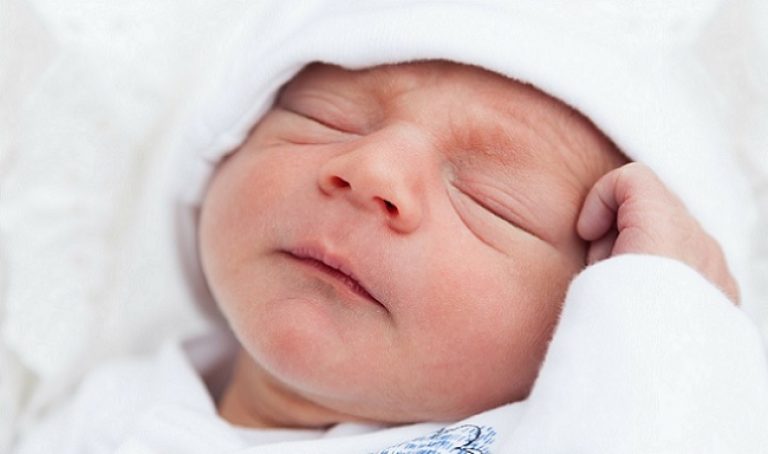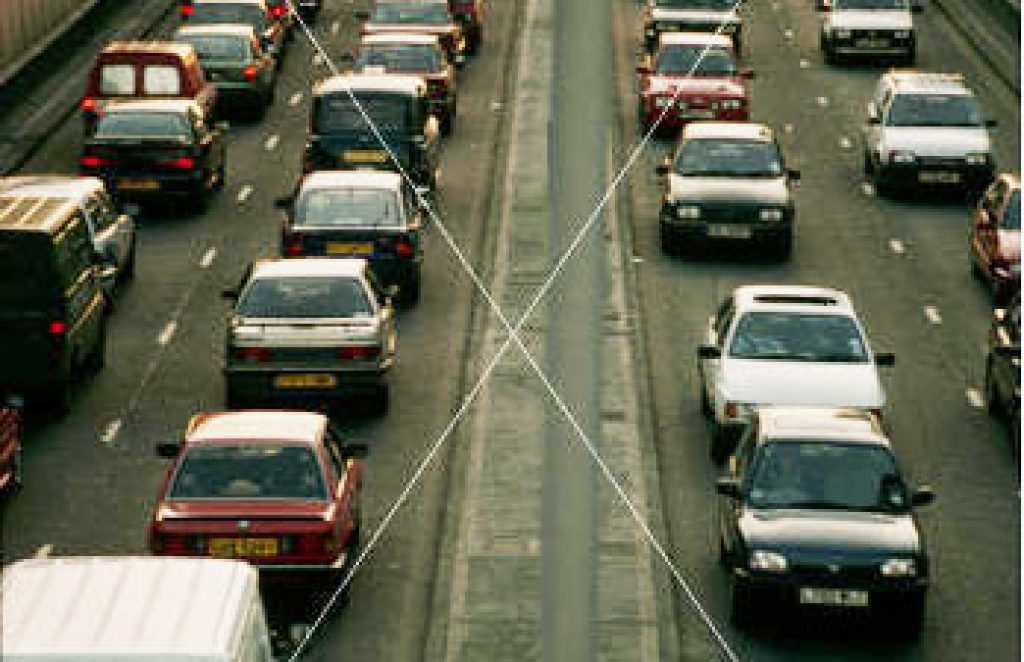
AsianScientist (Apr. 4, 2011) – Babies are born earlier when their mothers live near a concentration of freeways and main roads, a study of 970 mothers and their newborn babies in Logan City, south of Brisbane has found.
Senior research fellow Associate Professor Adrian Barnett from Queensland University of Technology’s (QUT) Institute of Health and Biomedical Innovation (IHBI) said the study, published today in the online journal Environmental Health, showed that the more freeways and highways around a pregnant woman’s home, the higher the likelihood of her baby being born prematurely.
“The most striking result was the reduction in gestation time of 4.4 percent or almost two weeks associated with an increase in freeways within 400 meters of the women’s home,” said Professor Barnett, whose earlier study found a strong association between increased air pollution and small fetus size.
Despite a relatively small increase in risk, the correlation with premature births is speculated to occur due to air pollution from nearby roads. As pre-term and low-birth weight babies stay in hospital longer after birth, they subsequently have an increased risk of death and are more likely to develop disabilities.
Generally, air pollution levels in south-east Queensland are low compared with industrial cities, but people’s exposure to the chemical toxins in vehicle emissions is relatively high because of an outdoor lifestyle and open houses.
The study counted the number of roads around the mother’s homes up to a 500 meter radius. This distance was chosen as this has implications for local governments planning expansions or new roads. Most of the effects observed in this study were within a 200-meter radius, but negative health effects were present up to 400 meters.
Professor Barnett said the study took into account the effects of smoking levels and the socio-economic status of the mothers. Noise pollution was also considered to be a possible contributing factor, but it was difficult to separate the effects of air and noise pollution.
“Vehicles braking and starting means that road junctions have some of the highest levels of noise and air pollution,” he said. “Disturbed sleep during pregnancy may cause extra stress and be a risk factor for adverse birth outcomes.”
Finally, the study recommended that pregnant women should reduce their exposure to traffic. A reduction in traffic emissions through improved vehicles or increased public transport use would have immediate health benefits by giving children a better start to life.
The article can be found at: Barnett AG et al. (2011) Increased traffic exposure and negative birth outcomes: a prospective cohort in Australia.
———
Source: Queensland University of Technology.
Disclaimer: This article does not necessarily reflect the views of AsianScientist or its staff.