AsianScientist (Jan. 3, 2012) – An immediate moratorium on habitat conversion is needed to secure a future for Sumatran elephants, conservation organization WWF says.
The Sumatran elephant subspecies Elephas maximus sumatranus has been uplisted by the International Union for Conservation of Nature (IUCN) from “endangered” to “critically endangered” after losing nearly 70 percent of its habitat and half its population in one generation, mainly due to deforestation and conversions to agricultural plantations.
Although Sumatran elephants are protected under Indonesian law, 85 percent of their habitats are located outside of protected areas, and Sumatra has lost over two-thirds of its natural lowland forest in the past 25 years.
There are only an estimated 2,400 to 2,800 of the animals remaining in the wild, a reduction of about 50 percent from the 1985 population estimate. Scientists say that if current trends continue, Sumatran elephants could be extinct in the wild in less than 30 years.
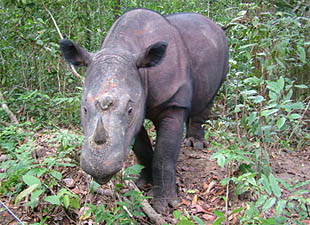
“The Sumatran elephant joins a growing list of Indonesian species that are critically endangered, including the Sumatran orangutan, the Javan and Sumatran rhinos and the Sumatran tiger,” said Dr. Carlos Drews, Director of WWF’s Global Species Program.
In Sumatra’s Riau Province, where pulp and paper industries and oil palm plantations are causing the some of the world’s most rapid rates of deforestation, elephant numbers have declined by a staggering 80 percent in less than 25 years.
Similarly, Lampung Province has seen its number of elephant herds decline from twelve in the 1980s to only three by 2002 as a result of forest loss. Just two of the remaining herds are considered biologically viable.
WWF has called upon all stakeholders, including the Government of Indonesia, oil palm companies, members of the pulp and paper industry and conservation organizations, to work together to conserve Sumatran elephant habitat.
“Forest concession holders such as pulp and paper companies and the palm oil industry have a legal and ethical obligation to protect endangered species within their concessions,” said Anwar Purwoto of WWF-Indonesia.
——
Source: WWF.
Disclaimer: This article does not necessarily reflect the views of AsianScientist or its staff.