AsianScientist (May 5, 2014) – Researchers in Japan have reported that mice lacking an intracellular trafficking protein called LMTK3 are hyperactive.
Hyperactivity is a behavioral disorder that shows symptoms including restlessness, lack of coordination and aggressive behavior. Identifying the genetic factors that contribute to such behaviors may help to explain the pathological mechanisms underlying autism and attention deficit hyperactivity disorder (ADHD) in humans.
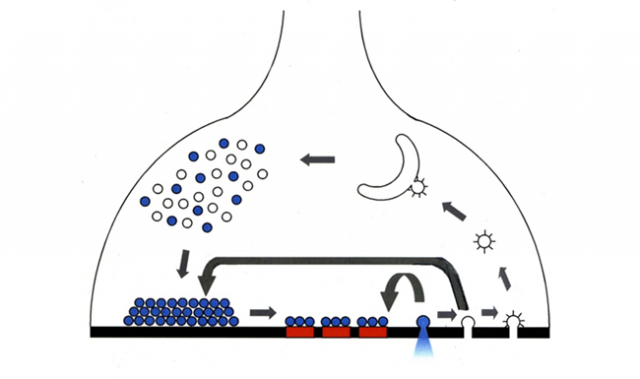
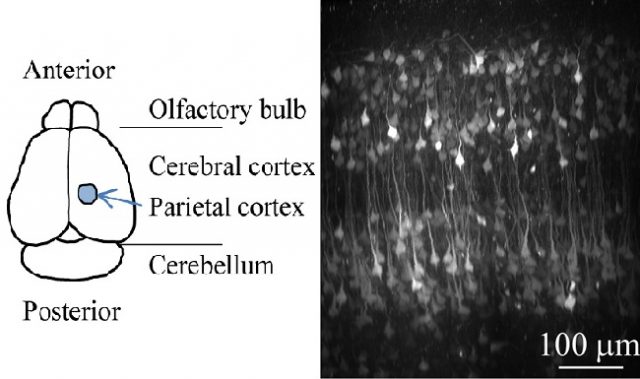
LMTK3 is abundant in two brain regions: the cerebral cortex and the hippocampus. In the brain, neurons communicate via connections called synapses. To send a message, a nerve terminus in the pre-synapse releases neurotransmitters to be received by the post-synaptic receptors.
The study, which was published in the Journal of Neuroscience, was led by Professor Tadashi Yamamoto from the Okinawa Institute of Science And Technology (OIST). Yamamoto’s team discovered that LMTK3 regulates trafficking of neurotransmitter receptors at synapses. In neurons of mice deficient in LMTK3, internalization of receptors are augmented in the post-synapse, suggesting that synaptic communication is impaired. The LMTK3-deficient mice exhibited various hyperactive behaviors such as restlessness and hypersensitivity to sound.
Interestingly, dopamine levels in the LMTK3-deficient mice were elevated. Dopamine is a neurotransmitter known to be involved in regulation of movement and hormone levels, motivation, learning and expression of emotion. Excessive dopamine secretion results in schizophrenia, causing a loss of integrity of neuronal activity, and abnormal thoughts and emotions. The relationships between regulation of neurotransmitter receptor expression by LMTK3, dopamine turnover and the biochemical pathways that induce hyperactivity, remain unknown.
“We hope to advance our research in order to elucidate genetic defects that result in behavioral abnormalities,” Yamamoto said.
The article can be found at: Inoue et al. (2014) LMTK3 Deficiency Causes Pronounced Locomotor Hyperactivity and Impairs Endocytic Trafficking.
———
Source: Okinawa Institute of Science And Technology
.
Disclaimer: This article does not necessarily reflect the views of AsianScientist or its staff.