AsianScientist (May 9, 2011) – Ever since the publication of the bestselling book, Battle of Hymn of the Tiger Mother, by Yale Professor Amy Chua, there has been considerable debate about Asian versus Western parenting skills.
Asian students are in general better academically, as shown by the latest International Student Assessment scores where four of the world’s five top-scoring countries besides Finland are Asian countries, and have a high university matriculation rate.
But is this a product of tough Asian parenting skills? Economics Professor Valerie Ramey from the University of California San Diego decided to do a quantitative analysis on the Tiger Mother phenomenon. She looked at four issues:
- Do Asian students study longer?
- How do Asian students spend their week?
- After leaving their nest do Asian students still in general study longer?
- How many hours do Asian mother’s spend on child related activity?
All data were in comparison to other ethnic groups listed as White, Black, and Hispanic.
The study found that Asian students spend more time studying while living at home, and the trend continued after leaving for university. However, as high school students, Asian students did not have any dramatic differences on how they spent their week compared to students from other ethnicities.
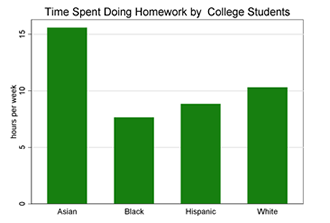
(Source: Valerie Ramey/UCSD).
The biggest difference, though, is the time spent on a part-time job. White students spend 5.8 hours per week on average, while Asian students spend only 2.4 hours. Asian students also spent less time socializing, working, and participating in sports.
When it came to mothers, Asian mothers spent more time on educational activities per week with their kids, but not by much – only 30 minutes. In conclusion, Dr. Ramey’s data showed that Asian students invest more time studying without much intervention by their mothers, but further studies need to be done to determine if it is the result of Asian parenting.
With this study, Dr. Ramey may have finally put to rest the myth of the Asian Tiger Mother.
——
Source: University of California San Diego.
Disclaimer: This article does not necessarily reflect the views of AsianScientist or its staff.